Before the Sea
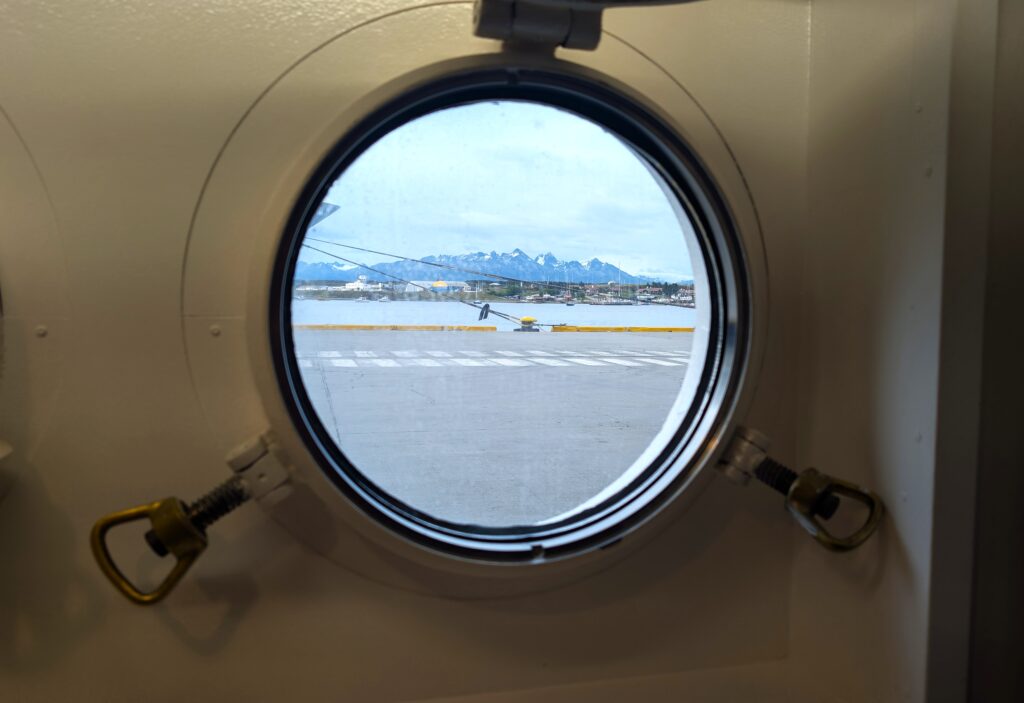
Two days before sailing, we arrived in Ushuaia.
The cold, the wind, and the distance change how time feels.
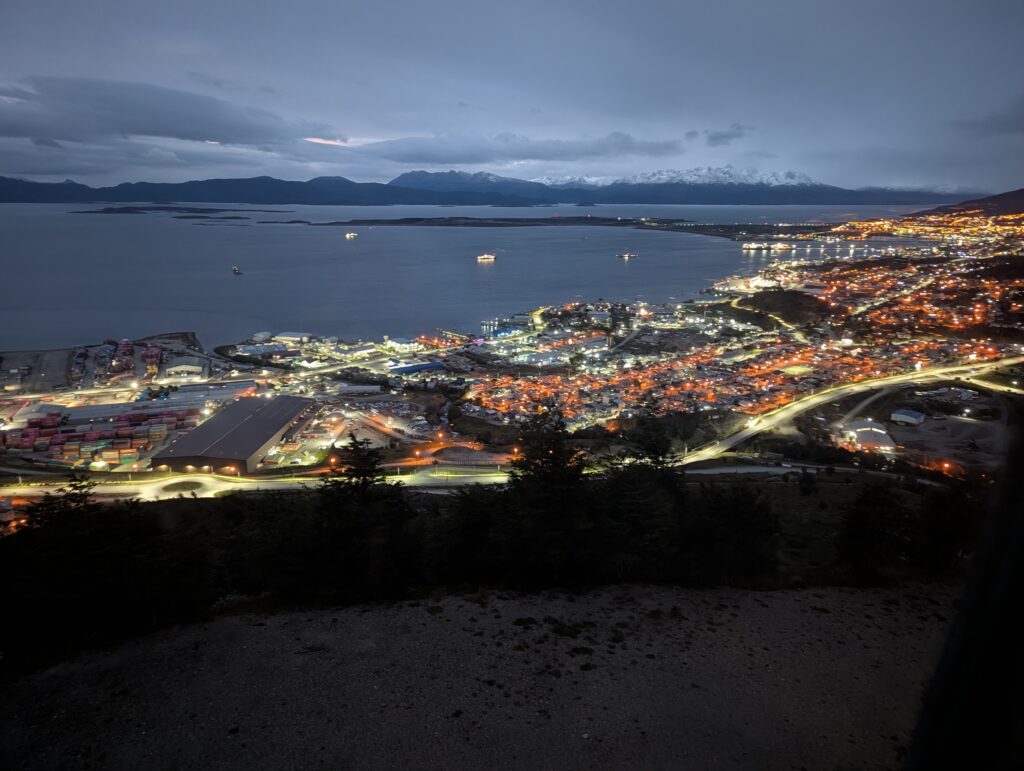
We stayed at Arakur Hotel, high above the city. From there, Ushuaia looks small, surrounded by mountains and water. The Beagle Channel stays quiet below, and the snowy peaks of Monte Olivia and Cinco Hermanos mark the horizon. Nothing feels rushed here.
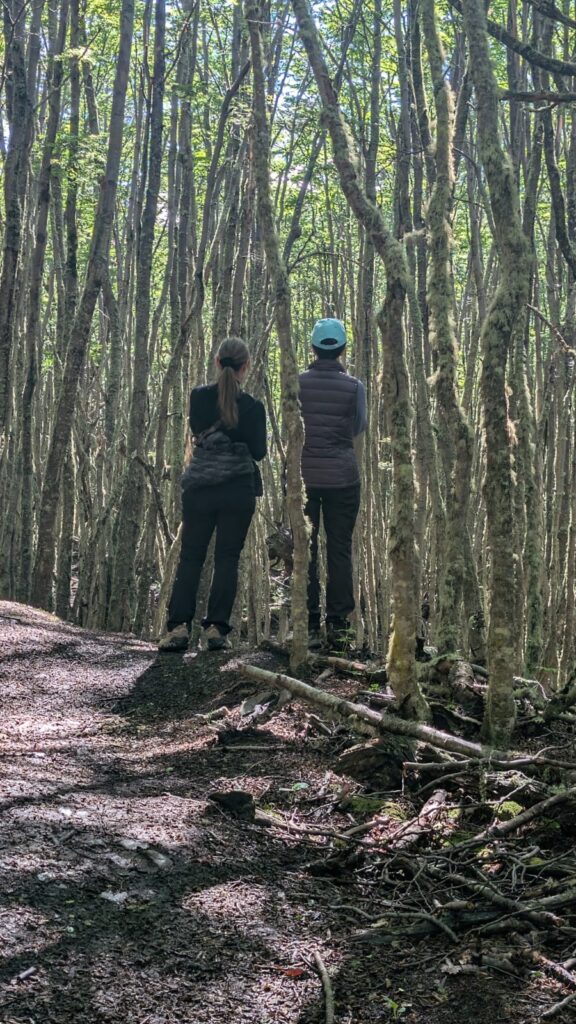
Those days were not about doing many things. Near the hotel, there are a few trails inside the Magellanic forest. We walked slowly between southern beech trees — mostly lenga, coihue, and ñire — shaped by wind, snow, and cold. In places more protected from the weather, canelo trees appear, bringing a deeper green to the forest.
We walked, rested, and spent time looking out the window.
It was a way to let the mind arrive first, before the body had to move again.
This pause mattered.
Soon, there would be no cities. No roads. No mountains behind us.
Only the sea.
Boarding the Seadventure
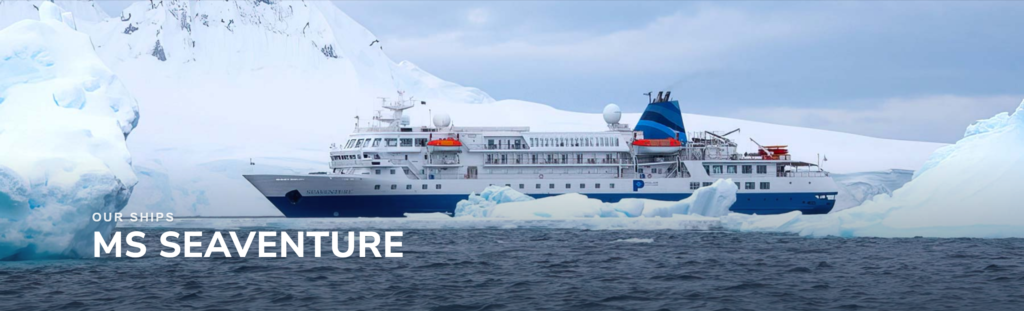
Today was the day we boarded the Seaventure.
After a welcome cocktail, we received our keys and were shown to our rooms. Everything felt organized and calm, like the ship was already preparing us for what was coming next.
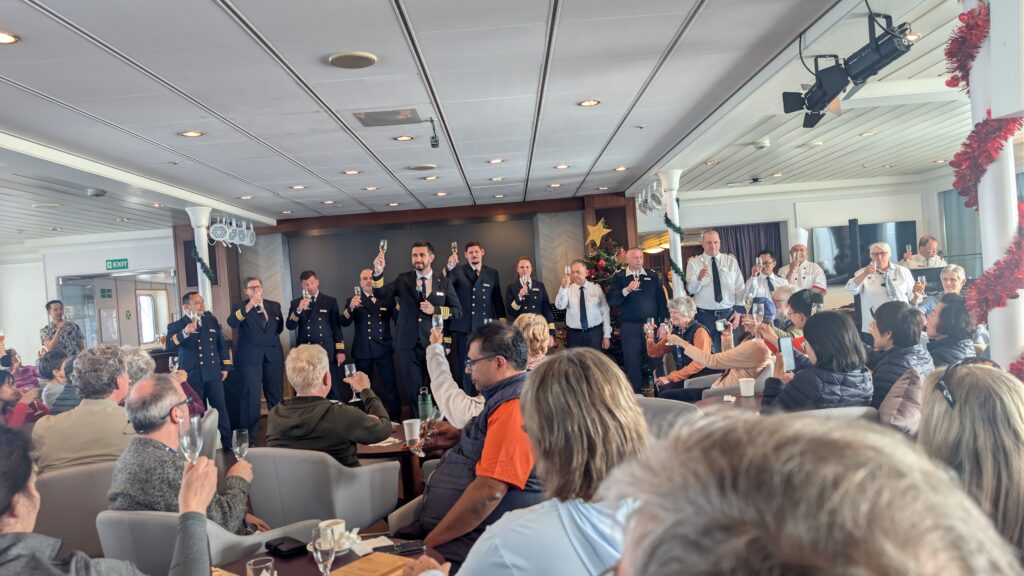
After dinner, we were informed that, due to weather conditions, the itinerary would be reversed. This meant that shortly after midnight we would enter the Drake Passage, heading south.
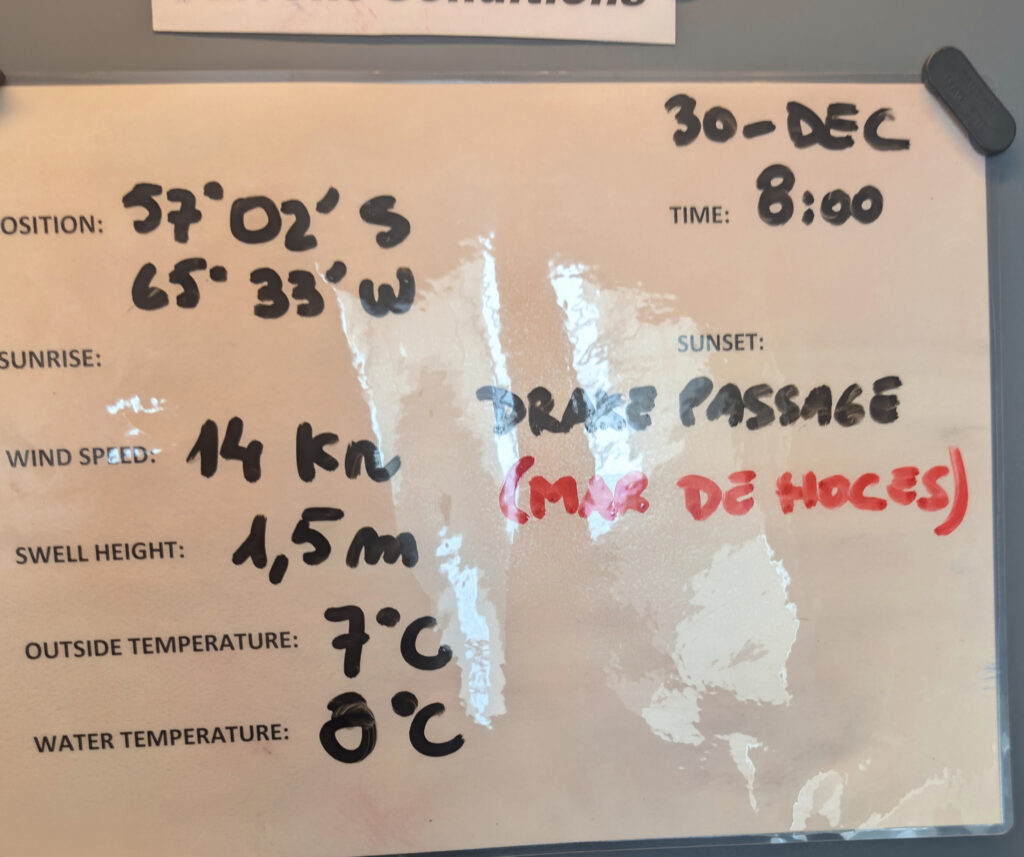
We knew what to expect. The Drake can bring waves of 40 to 60 feet, while more typical conditions are around 20 to 30 feet (6–9 meters). That night, conditions were much better than expected. After midnight, the waves did not exceed 2 meters (about 6.6 feet), and the passage felt surprisingly gentle.
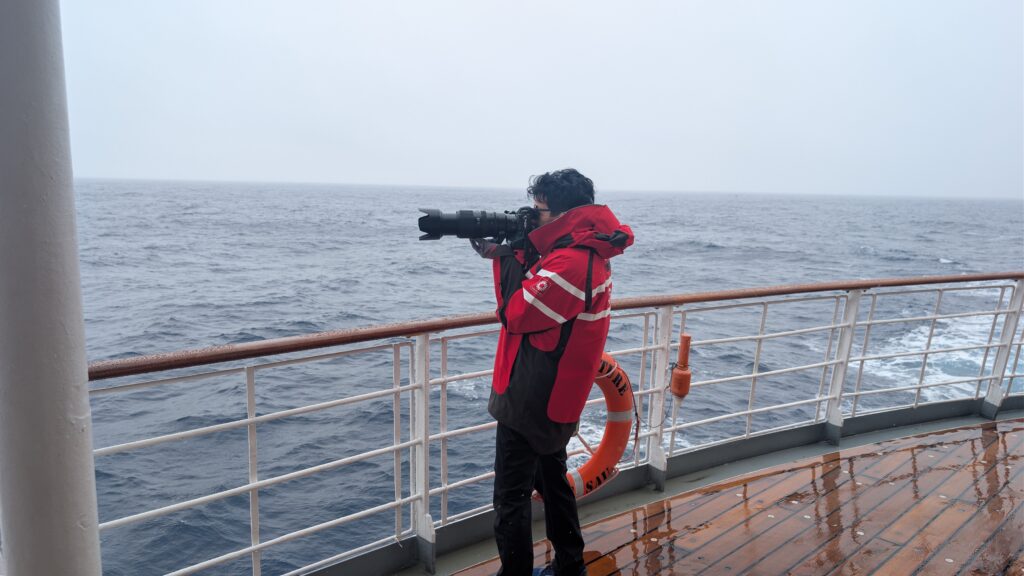
On the morning of December 30, after breakfast, we met with the captain and the crew. We also attended lectures about Antarctic birds, marine mammals, and the history of exploration in the region.
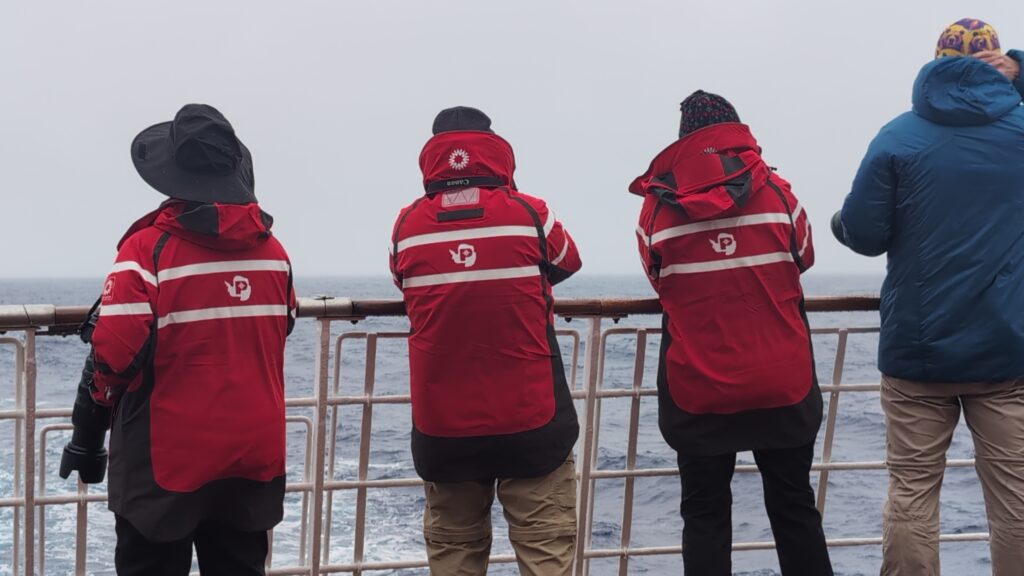
Later, we spent time on deck looking for wildlife. We spotted albatrosses and other seabirds following the ship as we moved farther south.
If conditions stayed the same, we were expecting to arrive at the Antarctic Peninsula by the afternoon of the 31st.
December 31 – Antarctic Peninsula
After lunch, we had some time on deck to look for birds. The ship’s photographer also gave a lecture about taking pictures in Antarctica, focusing on light, ice, and cold conditions.
Later, we were informed that New Year’s Eve dinner would be earlier than usual. After dinner, we would have our first zodiac disembarkation. Before that, we saw our first ice, a clear sign that we were finally arriving in Antarctica.
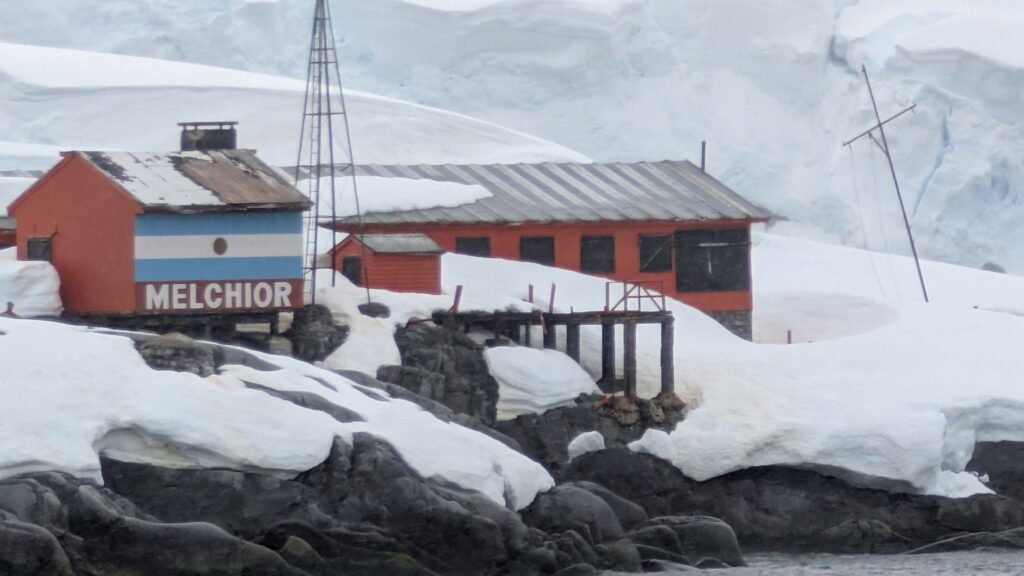
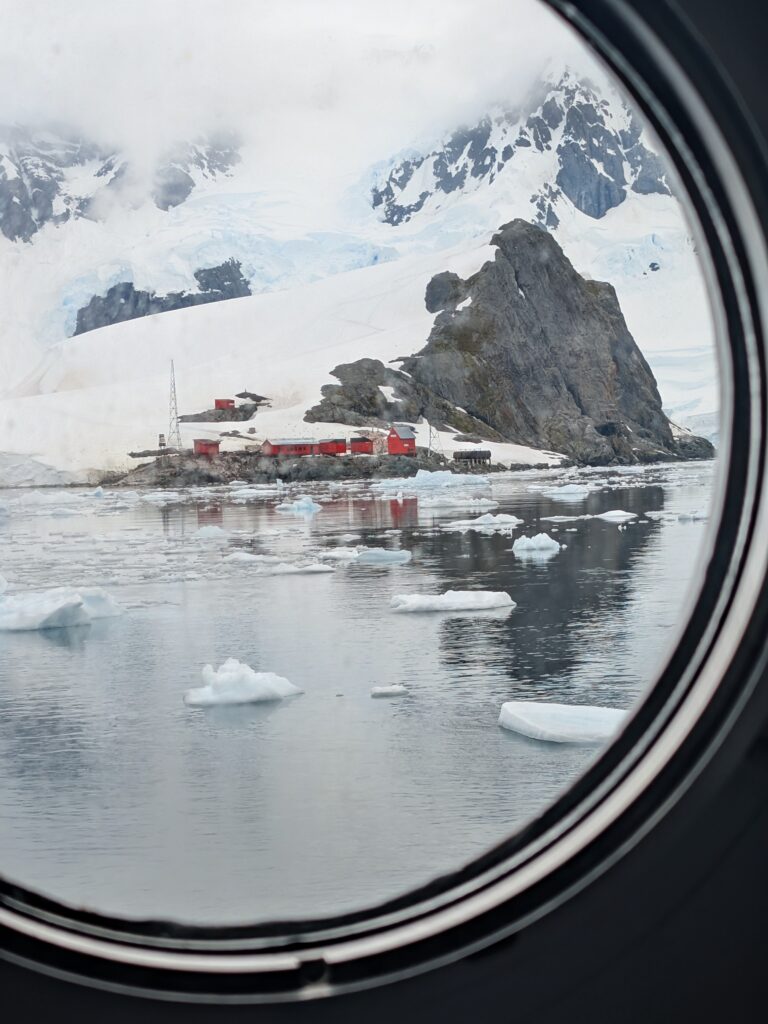
After the 6:00 pm dinner, we had our first zodiac experience of the trip. We cruised by zodiac in front of Melchior Base, an active Argentine scientific station located on Gamma Island, in the Melchior Islands of the Palmer Archipelago. The base operates during the summer season and supports research in meteorology, astronomy, and marine biology.
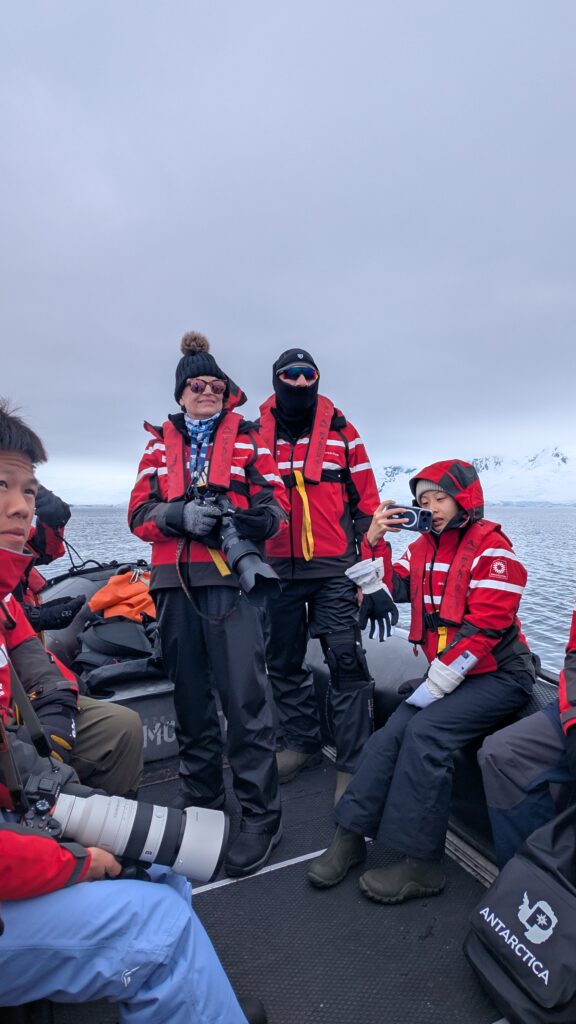
The location was impressive, surrounded by ice, water, and low clouds. During the zodiac cruise, we saw a couple of chinstrap penguins and felt the Antarctic weather for the first time.
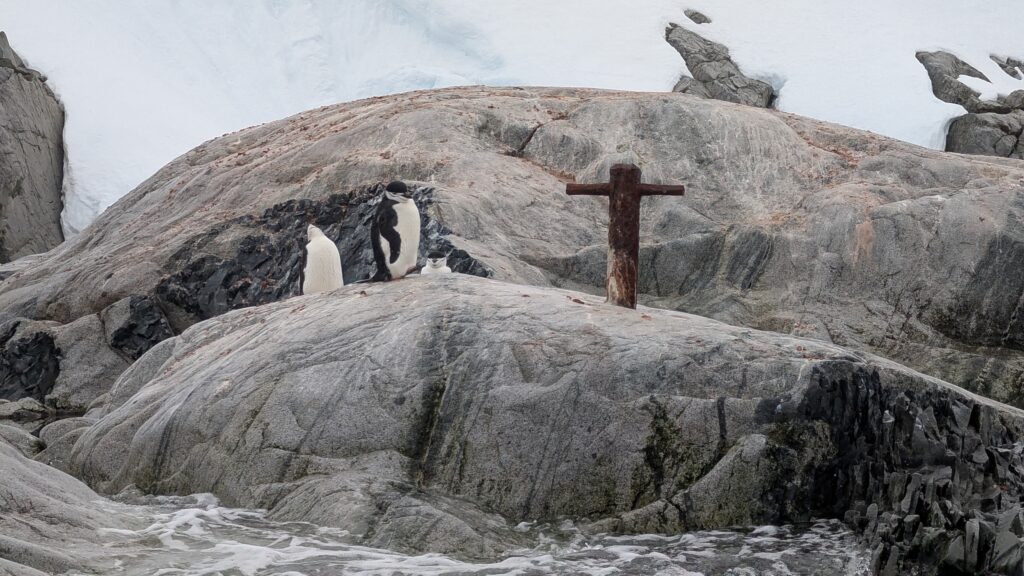
It was a quiet and meaningful way to end the year, already in Antarctica.
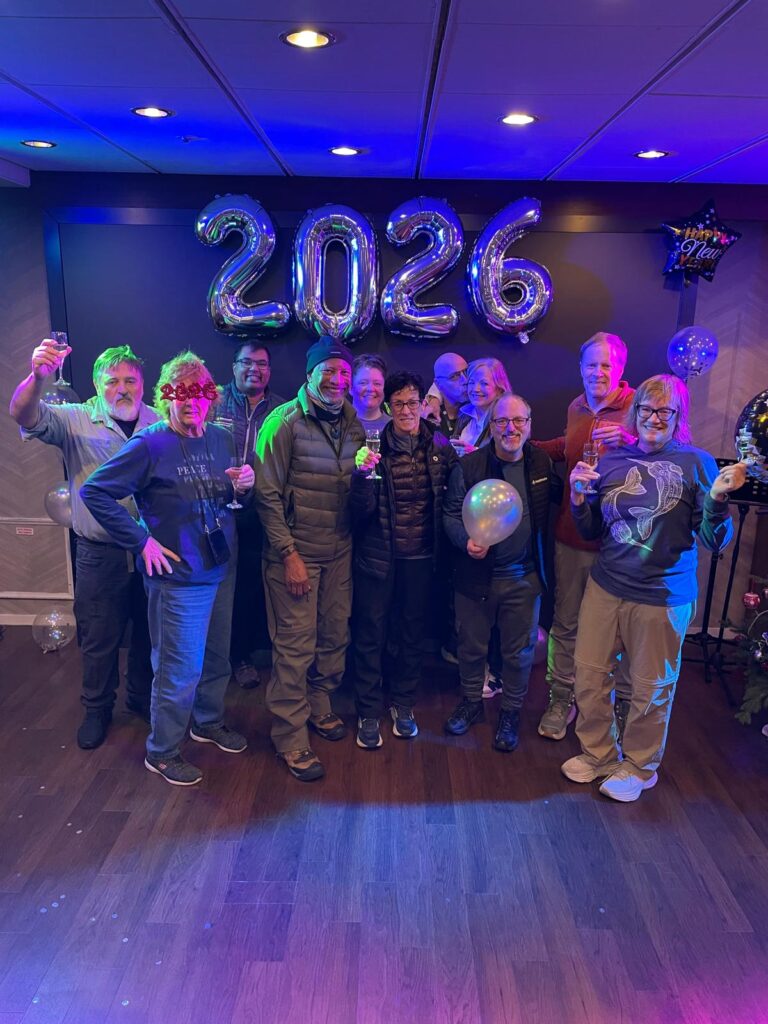
January 1 – Birthday in Antarctica
Cuverville Island & Paradise Bay (Brown Station)
January first was my birthday, and I started it in Antarctica.
After lunch, we went on an excursion to Cuverville Island, home to the largest Gentoo penguin colony on the Antarctic Peninsula. As soon as we landed, penguins were everywhere, moving between the shoreline and the water.
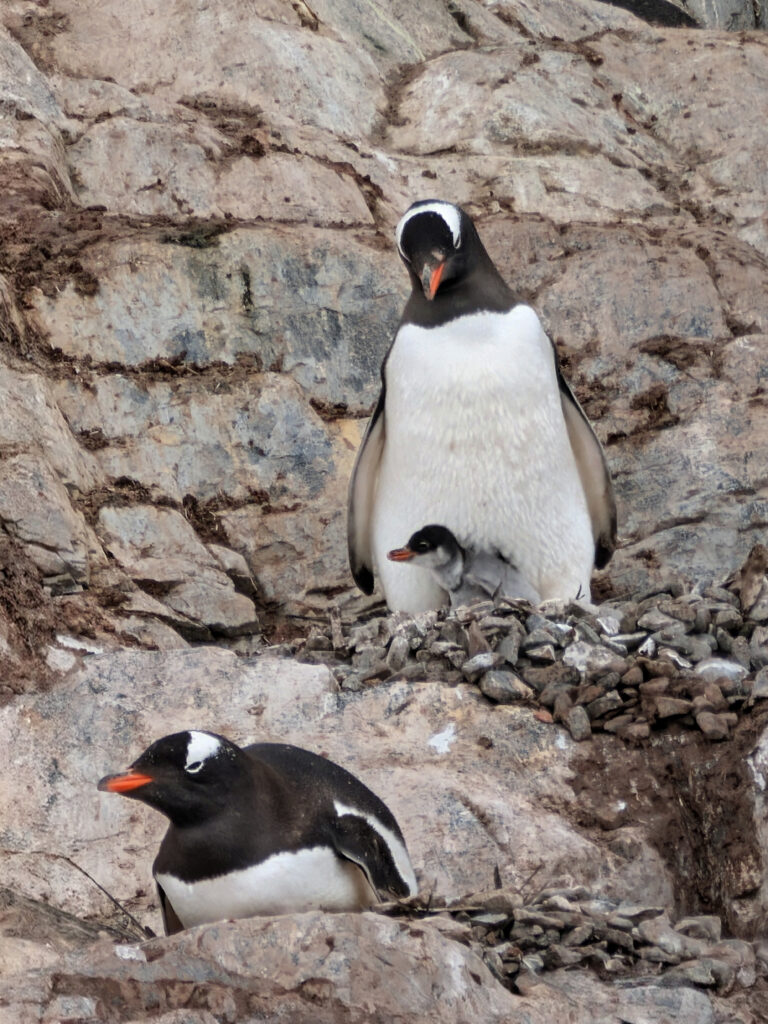
We walked along the shore, stopping often to look at the rocks, sea ice, and nearby icebergs. The sounds of the colony and the wind filled the area, and we kept watching the channel, looking for whales moving through the water.
The Gentoo penguins were the main focus. We watched them walking over the rocks, sliding on the snow, and diving into the water around the island.
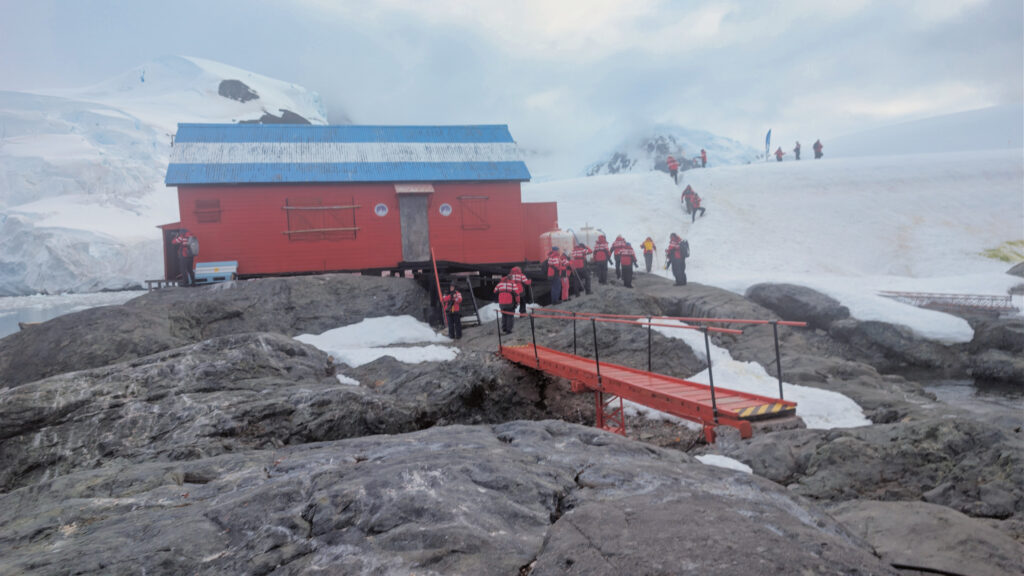
Later, in Paradise Bay, we disembarked at Brown Station. From there, we hiked uphill to enjoy wide views of the bay, surrounded by ice, mountains, and calm water. Most of the penguins we saw in this area were Gentoo penguins, moving along the slopes and near the station. Throughout the day, the team from Polar Latitudes took great care of us and could not have been more helpful or kind.
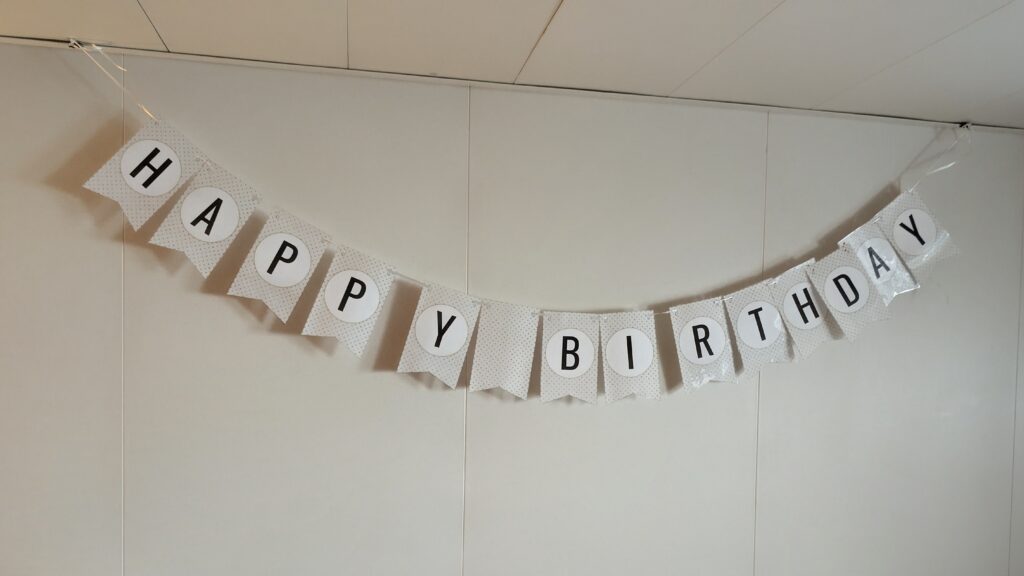
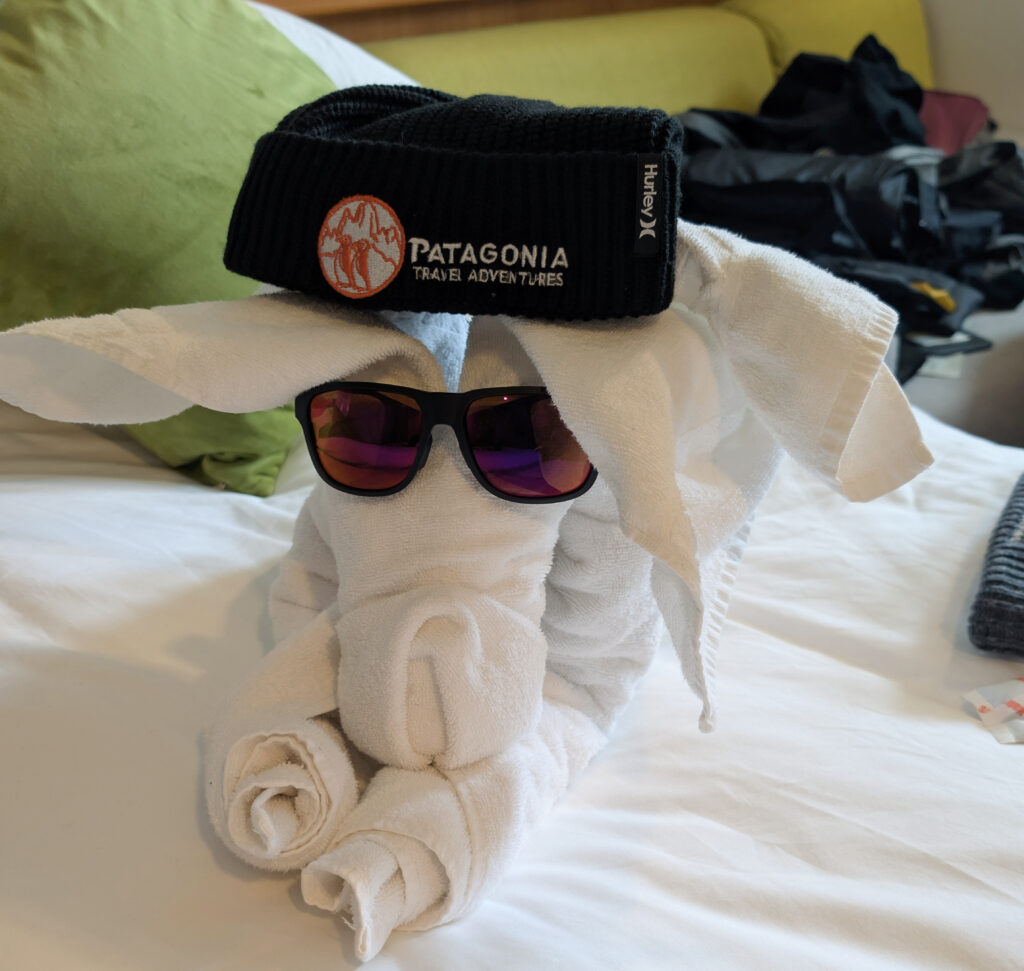
When I returned to my room after the excursion, I found a surprise waiting for me. On the bed, there was an animal and a birthday cake made from towels, a bottle of wine, and a sign on the wall that read “Happy Birthday.”
After dinner, the crew surprised me again with a real birthday cake, and the waiters and waitresses sang Happy Birthday. It was a simple moment, but one I will remember.
Spending my birthday here felt special. The celebration was generous and thoughtful, and more than I could have expected, especially so far from home.
January 2 – Charlotte Bay
Whales & Polar Plunge
The morning started with a zodiac ride in Charlotte Bay. The water was calm, and visibility was good, making it a perfect place to watch wildlife.
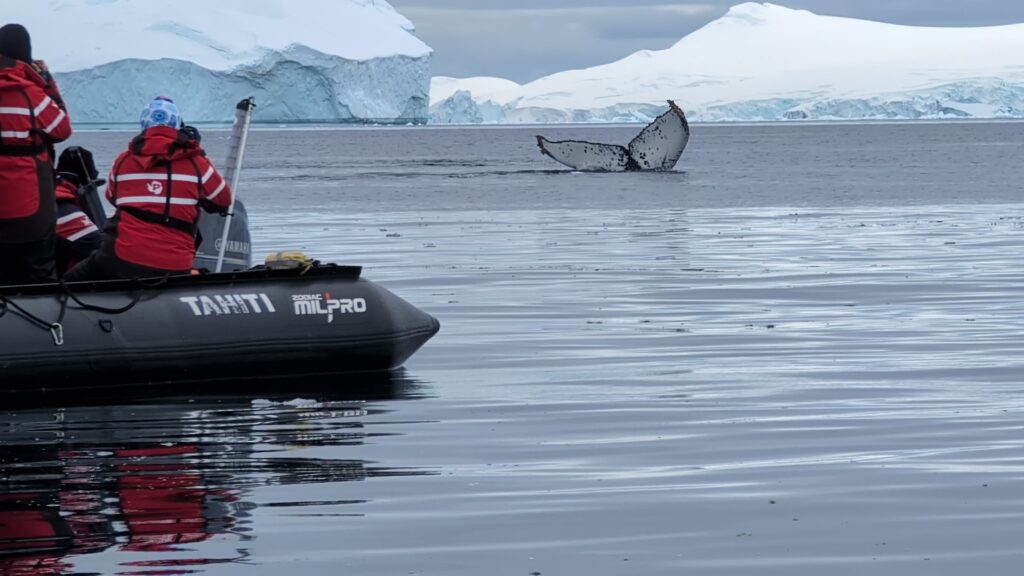
During the ride, we saw humpback whales in the bay. Some were logging at the surface, resting quietly, and a few lifted their tails out of the water before diving. Watching them from the zodiac, surrounded by ice and mountains, was an unforgettable moment.
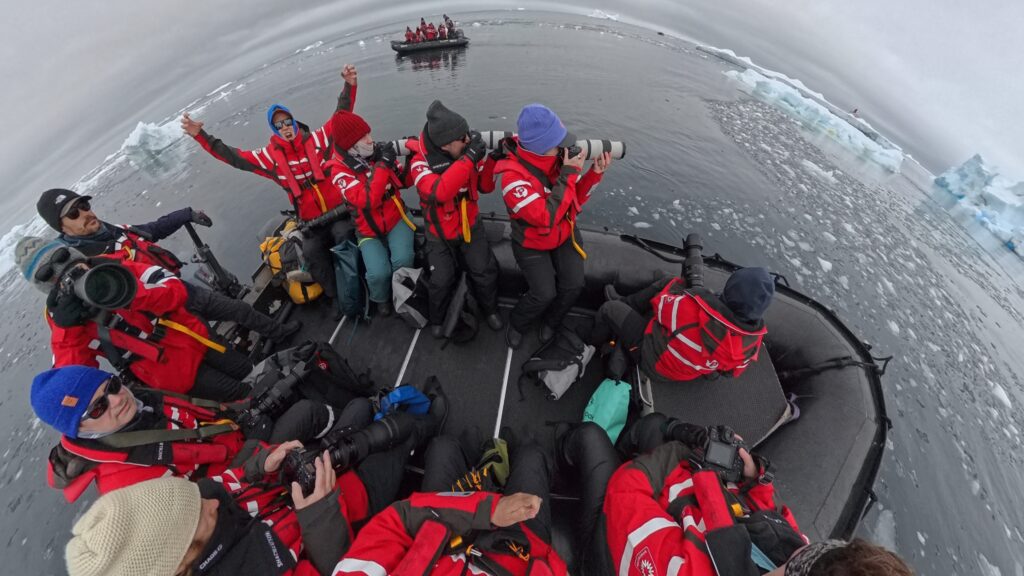
Later in the day, the ship organized a polar plunge. Many people took part, jumping into the icy Antarctic water. I stayed on board and watched as the participants came out cold, excited, and smiling.
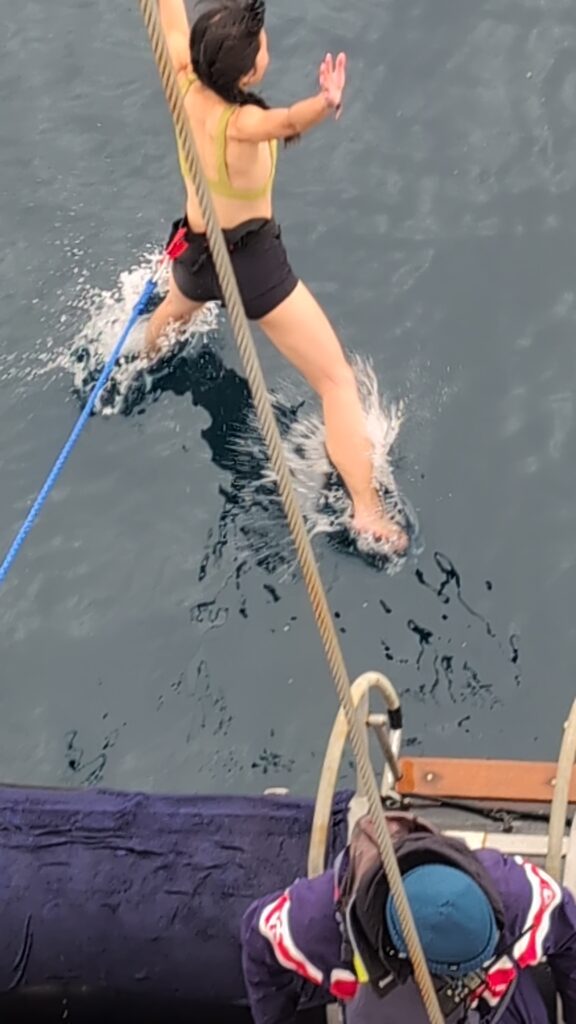
Charlotte Bay offered both calm wildlife encounters and a lively moment back on the ship, making it a memorable day in Antarctica.
anuary 3 – Half Moon Bay
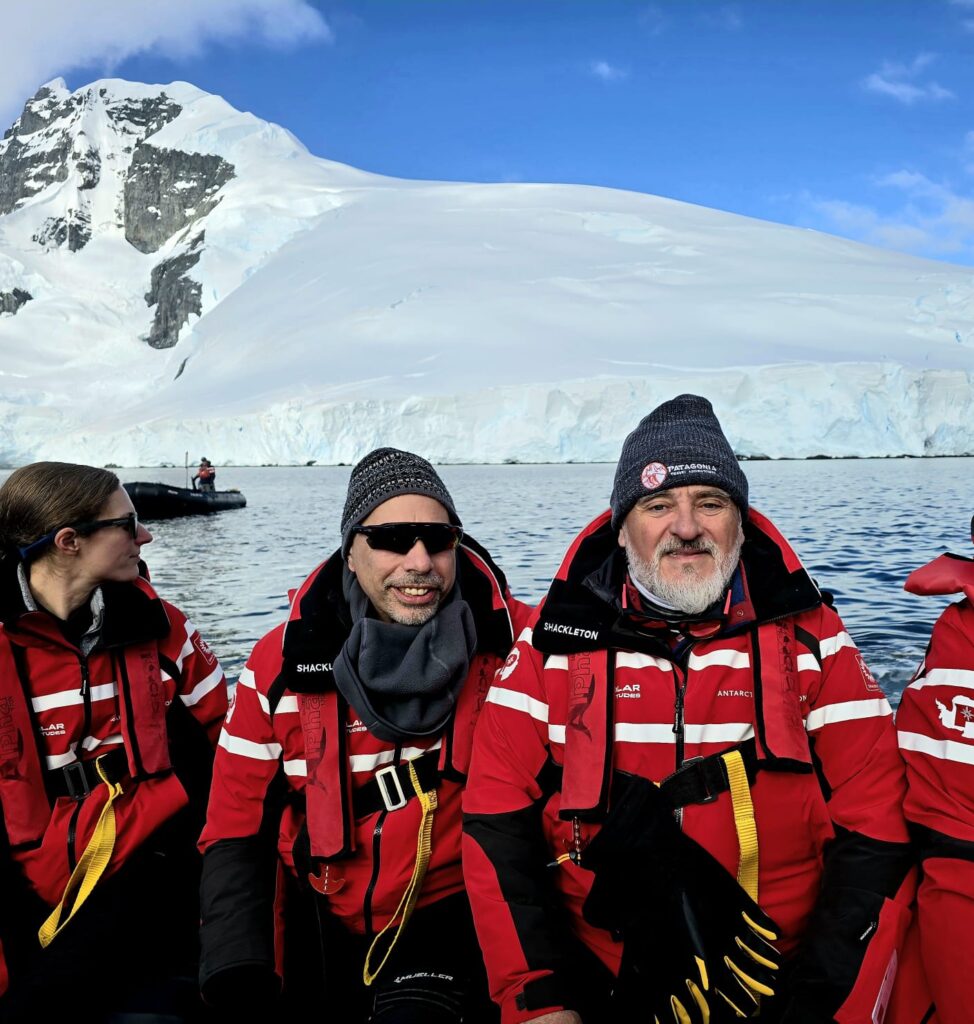
We went to Half Moon Bay, a place protected from the wind, with an amazing view of the surrounding mountains and ice. The conditions were very good, and the day was clear and sunny, which made the landscape even more impressive.
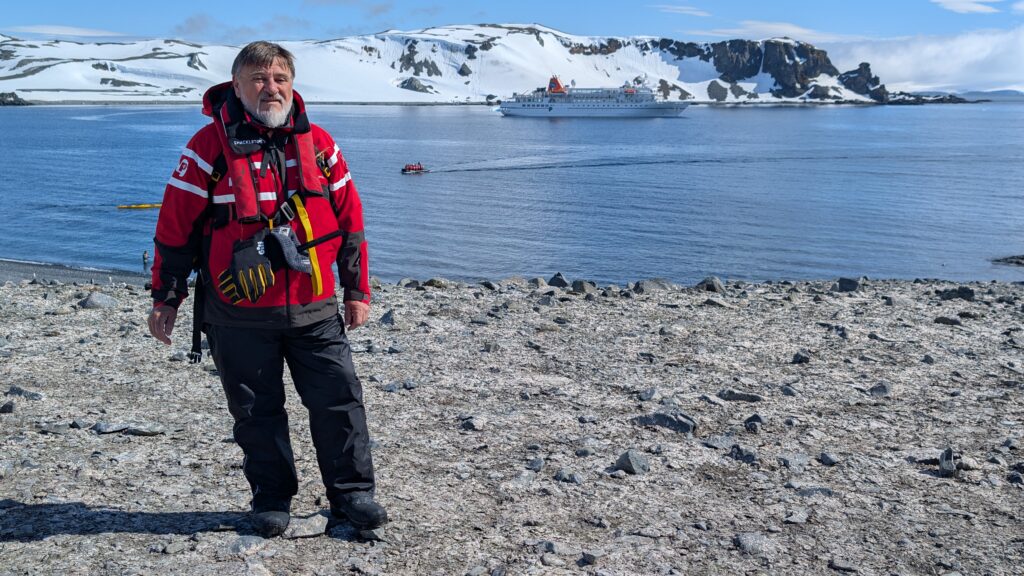
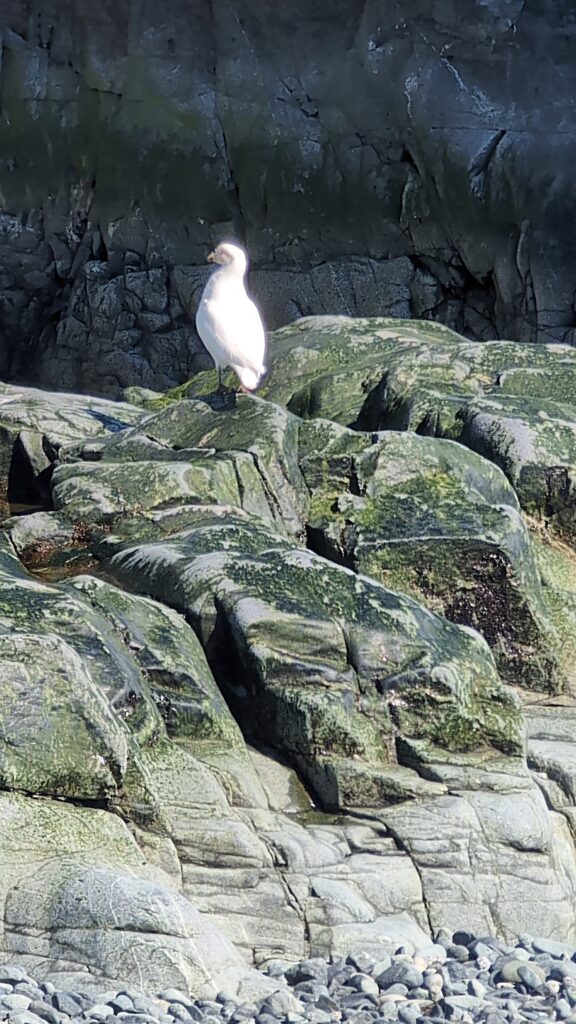
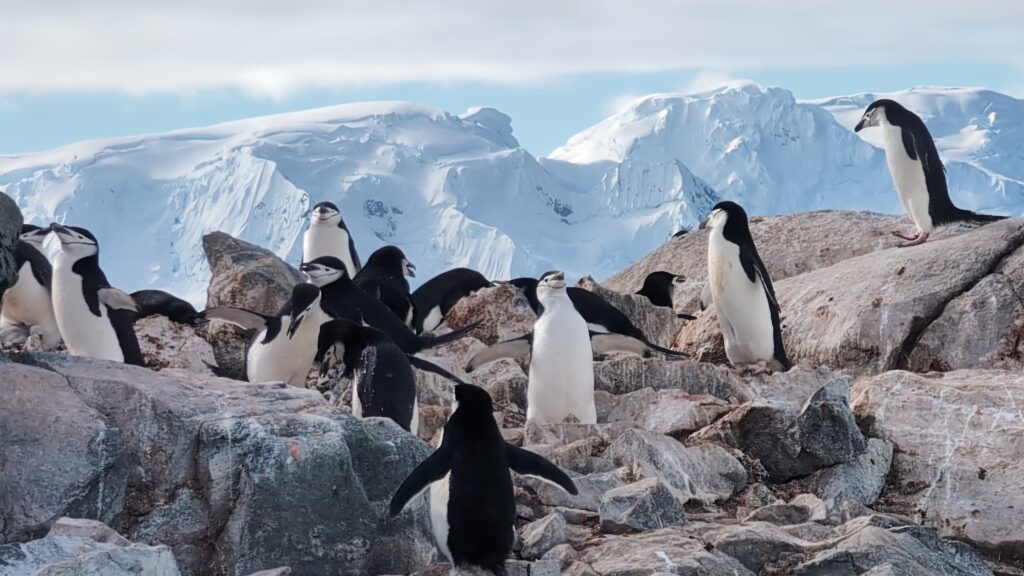
We spent time walking in the area, enjoying the rare feeling of a calm and bright day in Antarctica. Along the way, we saw chinstrap penguins, a couple of Gentoo penguins, and a few snowy sheathbills near the shore. The snowy sheathbill is a shorebird that migrates between Tierra del Fuego, Patagonia in Argentina, and the Antarctic Peninsula.
We also saw a couple of seals resting on the ice, undisturbed by our presence.
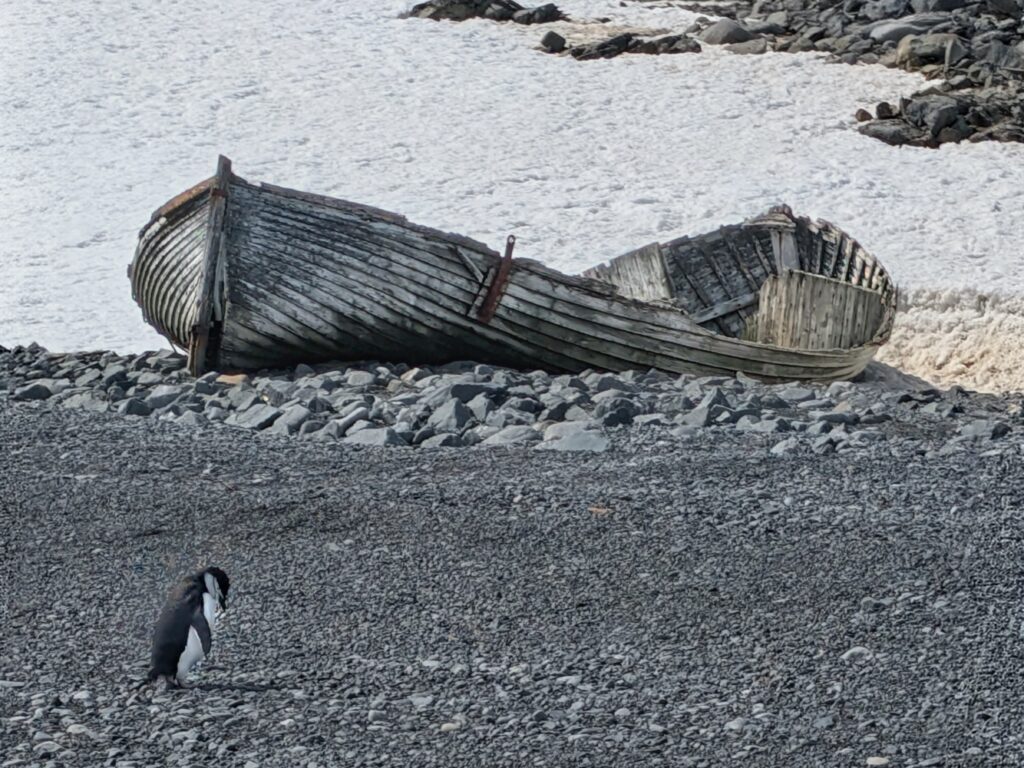
Near the disembarkation area, we could see an old wooden boat left behind when the whaling stations closed around the beginning of the 20th century. It was a quiet reminder of the human history in this remote place.
In the afternoon, we entered an area of pack ice, where sea ice surrounded the ship. Because the weather was calm, we were able to go out on zodiac cruises among the ice. From the zodiacs, we saw chinstrap penguins moving between the ice floes and whales swimming nearby.
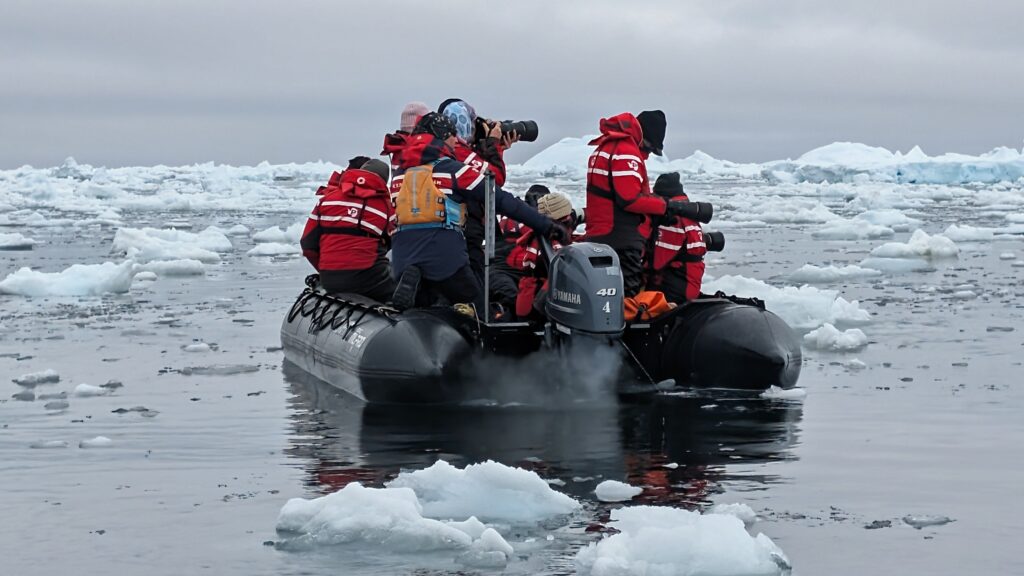
The calm conditions and the pack ice made the end of the day feel slow and quiet, a different side of Antarctica.
January 4 – Elephant Island
Point Wild
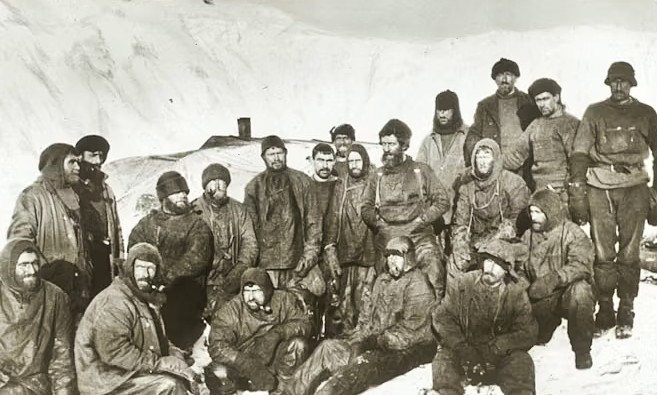
We arrived at Elephant Island, approaching Point Wild, a place with strong historical meaning. The island looked harsh and exposed, with steep cliffs, snow, and ice rising directly from the sea.
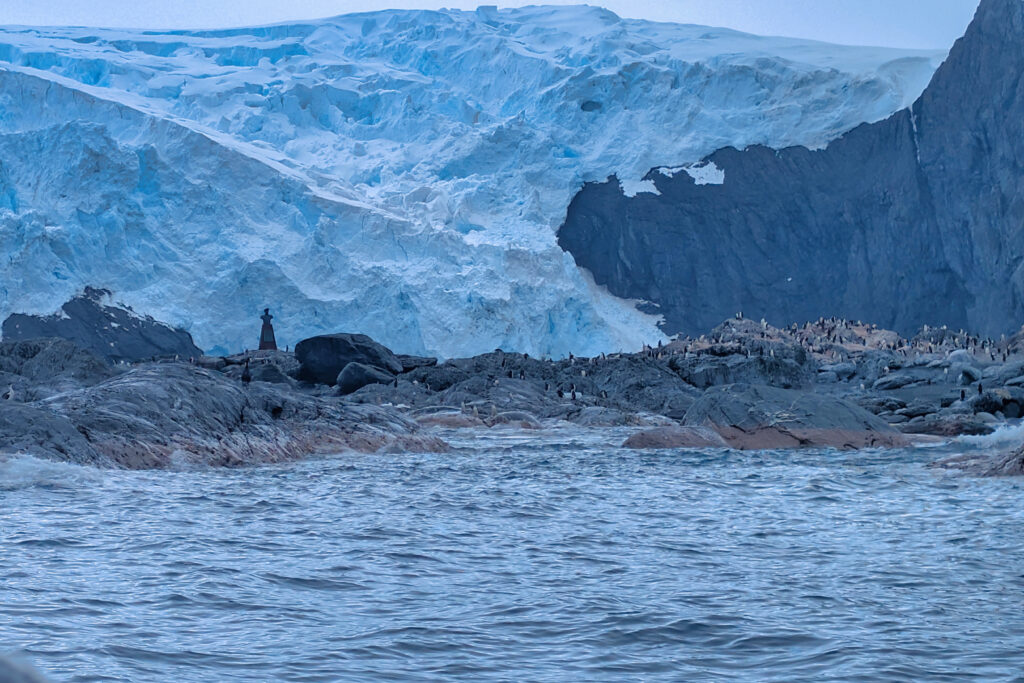
Point Wild is known as the place where Ernest Shackleton’s crew waited for rescue after the Endurance was lost in the ice. Seeing it in person made the scale and difficulty of their situation very clear. There is little protection from the wind and almost no flat ground.
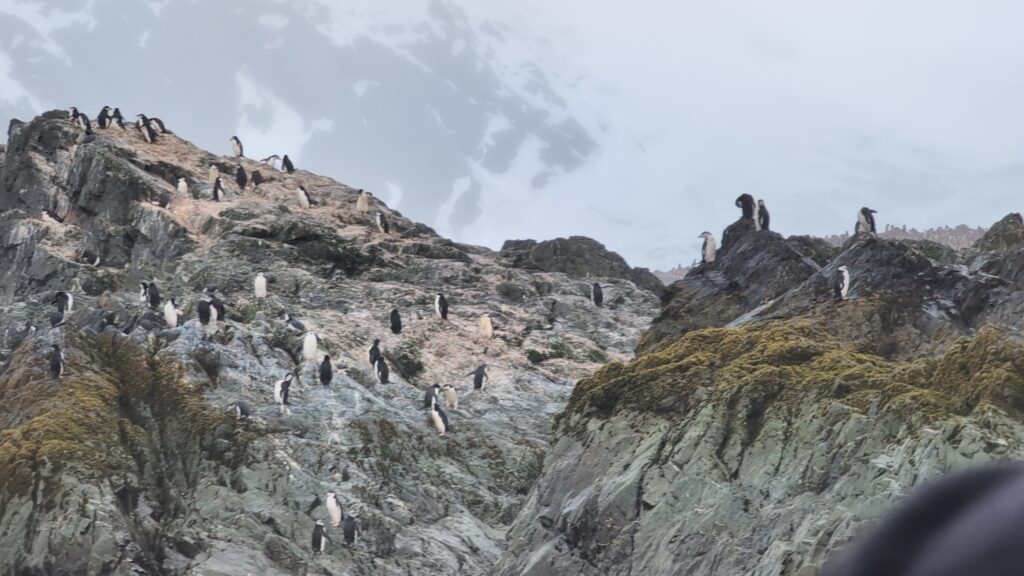
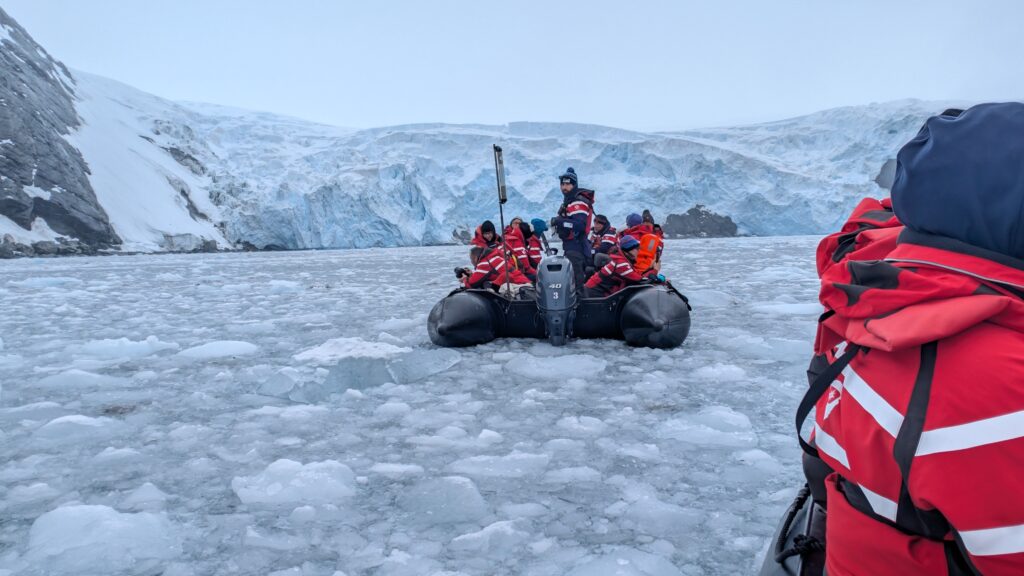
We stayed on the zodiacs, moving slowly along the coast. Wildlife was abundant, with mostly chinstrap penguins swimming in the water and standing on the rocks along the shore. The movement of penguins between land and sea was constant.
On the side of Point Wild, the glacier was calving frequently, with pieces of ice breaking off and falling into the water. The sound echoed across the bay and added to the sense of how active and unstable this environment is.
From the water, we could also see the memorial cross dedicated to Shackleton’s crew, standing against the dark rock and snow.
Elephant Island was not a place to land, but a place to observe and reflect. The combination of wildlife, ice, and history made it one of the most powerful stops of the journey.
January 5–6 – Sailing to South Georgia
January 5 and 6 were spent sailing east toward South Georgia. These were long days at sea, with the ship moving steadily across open water in semi-calm conditions.
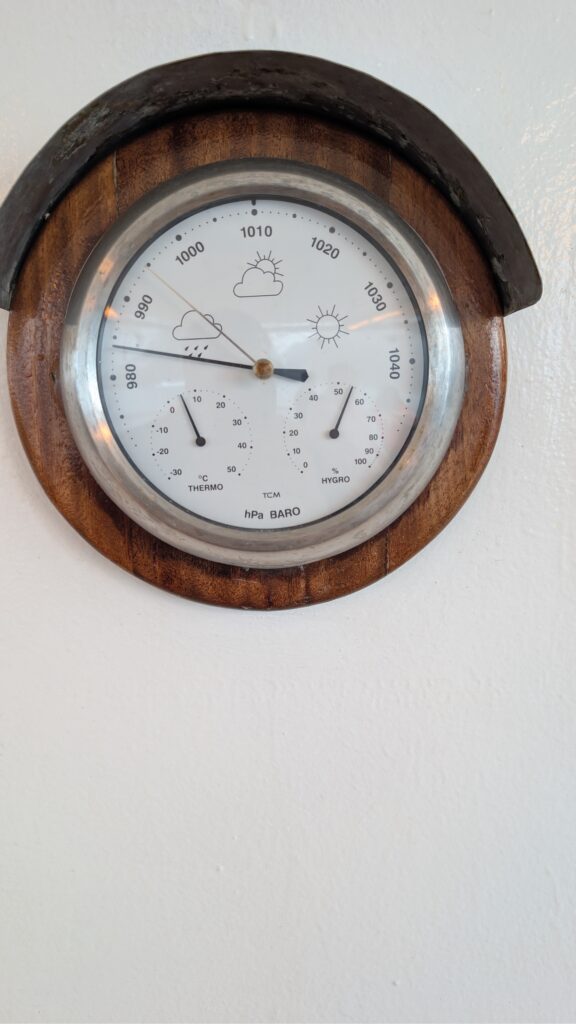
Life on board settled into a routine. Meals, time on deck, and moments of rest filled the day. The weather often changed, but the waters remained relatively calm, allowing us to spend time outside watching the sea and the horizon.
During the crossing, we attended several lectures and classes given by the expedition team. Topics included Shackleton and his journey, whales, and the wildlife of South Georgia. These talks helped us better understand the history and environment of the places we were about to visit.
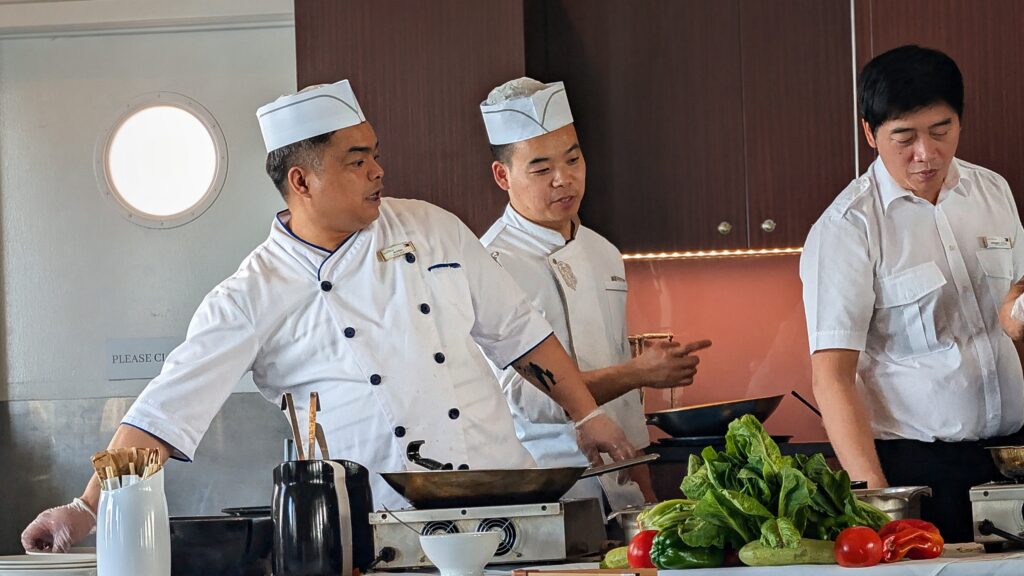
We also had a mandatory biosecurity meeting. The team explained the care we needed to take with our boots and outer clothing, which must be inspected and cleaned every day before going ashore. These measures are especially important because avian flu has been a problem on the island, and strict precautions are required to protect the wildlife.
Seabirds followed the ship throughout the journey, especially albatrosses and petrels, using the wind around the vessel to glide above the waves.
These days at sea felt like a transition. Antarctica was now behind us, and South Georgia was ahead. The distance and time allowed space to rest and prepare for the next part of the expedition.
January 7 – South Georgia
Gold Harbour
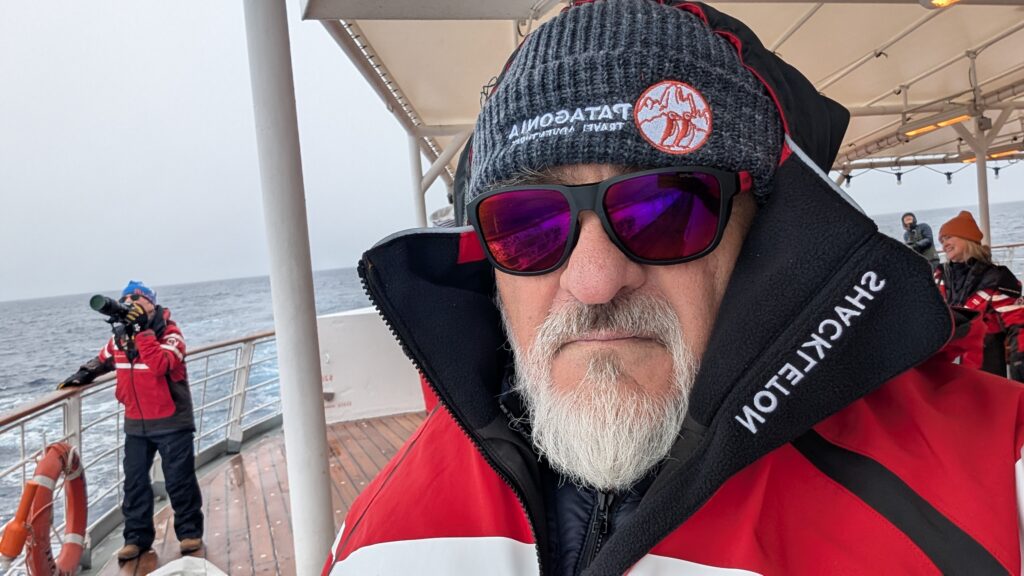
We arrived at South Georgia very early in the morning of January 7, after a very rough night at sea with large waves. As we entered Gold Harbour, the conditions changed completely. The water became calm, surrounded by steep mountains and glaciers, and wildlife was everywhere.
Even before breakfast, we could see penguins, seals, and seabirds along the shore. After breakfast, we boarded the zodiacs for a one-hour cruise. During the ride, we watched seals resting on rocks, penguins swimming, seabirds flying low over the water, floating ice, and impressive mountains rising straight from the sea.
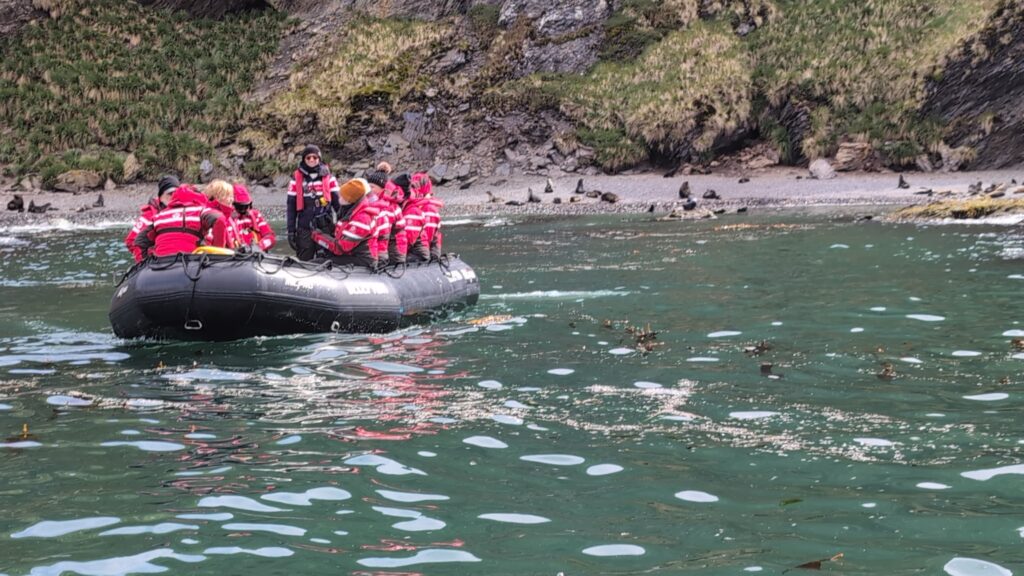
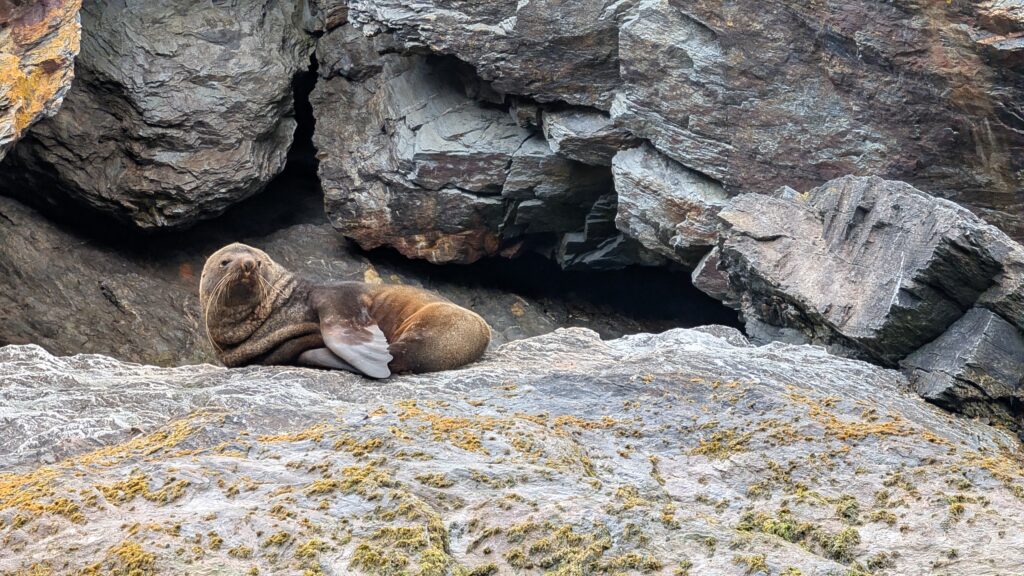
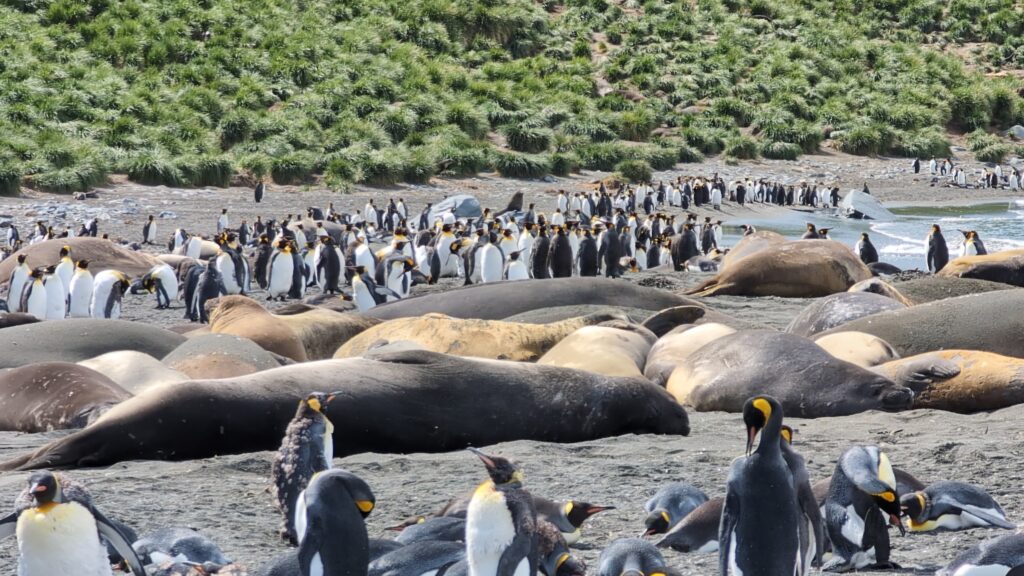
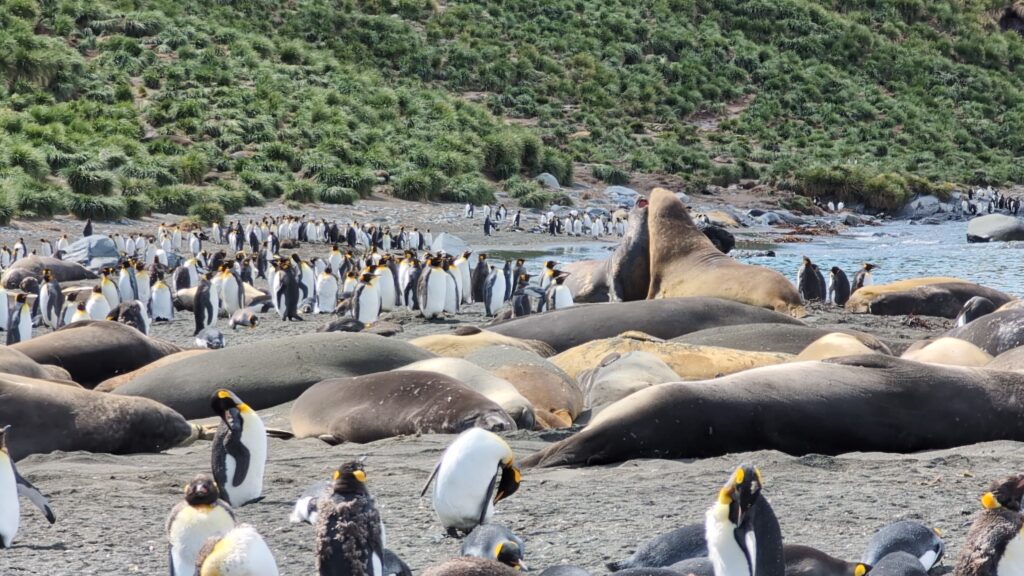
After the zodiac cruise, we disembarked on the beach, surrounded by thousands of king penguins. Among them, we also saw a few Gentoo penguins and one single macaroni penguin, easy to recognize among the larger colony.
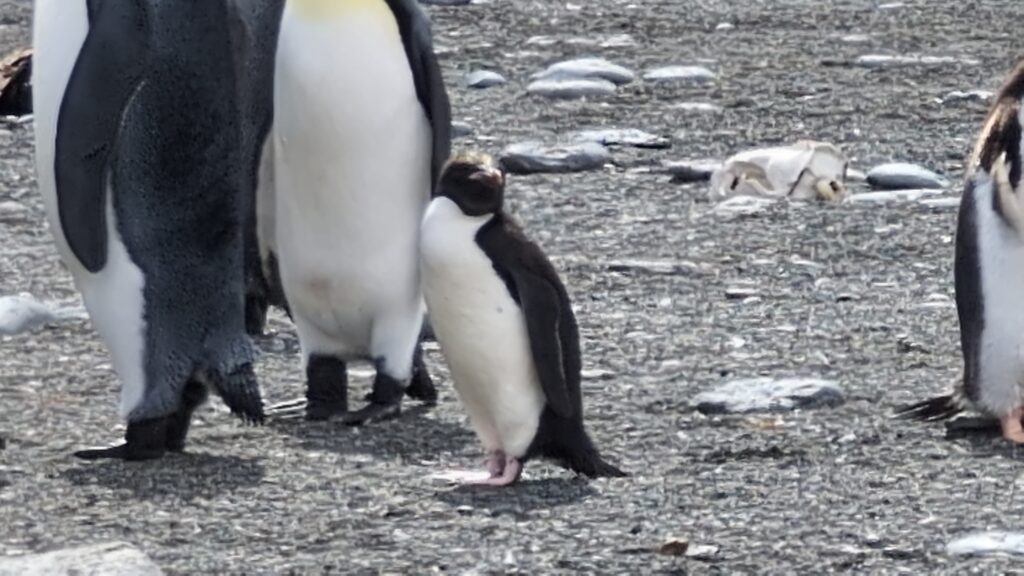
Between the penguins, we could see skuas moving along the beach and giant petrels, including southern giant petrels, resting nearby or flying overhead. One special sighting was the South Georgia pipit, an endemic bird that is now thriving again after the rat eradication program on the island.
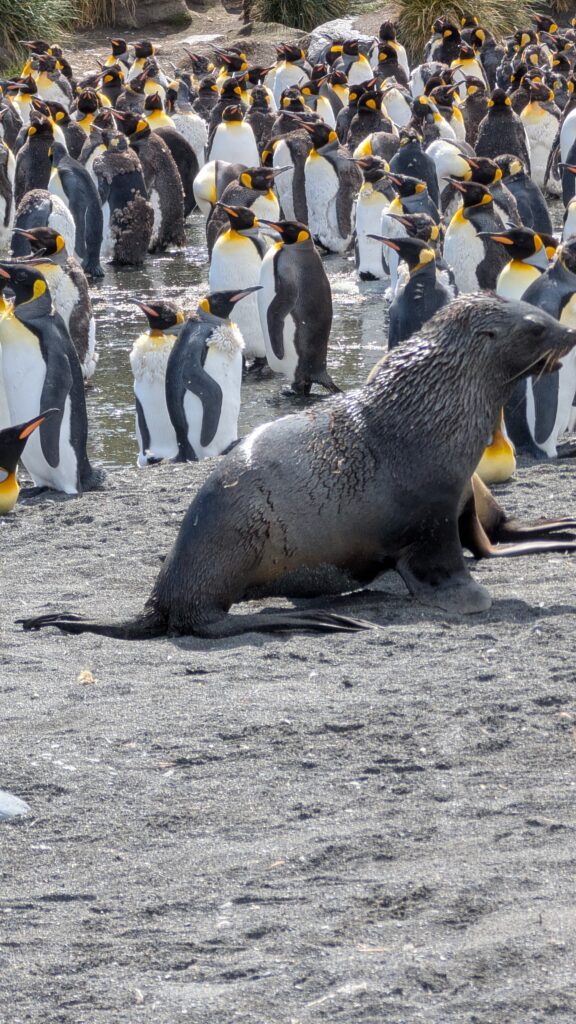
On the beach, there was also a group of southern elephant seals, resting and molting. Many of the king penguins were also molting at this time. For penguins, this process is known as catastrophic molt, because they lose all their feathers at once and cannot enter the ocean until the new feathers grow. The same applies to the southern elephant seals, which must complete their molt before returning to the ocean and traveling back to their feeding areas.
All of these activities took place between breakfast and lunch, making the morning feel full and intense.
In the afternoon, we returned to the zodiacs and continued along the coast toward St Andrews Bay, preparing for the next landing and another encounter with South Georgia’s wildlife.
Gold Harbour was full of sound, movement, and life, and it marked a powerful first day on the island.
January 8 – Hercules Bay & Grytviken
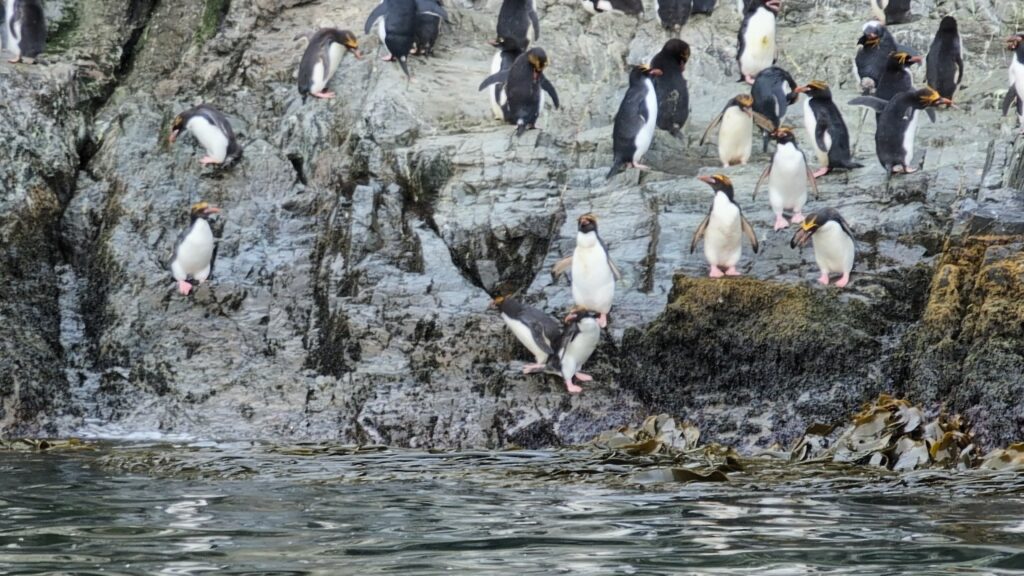
The day started with a zodiac cruise at Hercules Bay, a place known for its macaroni penguin colony. From the water, we could see penguins moving along the rocky slopes and entering the sea in small groups.
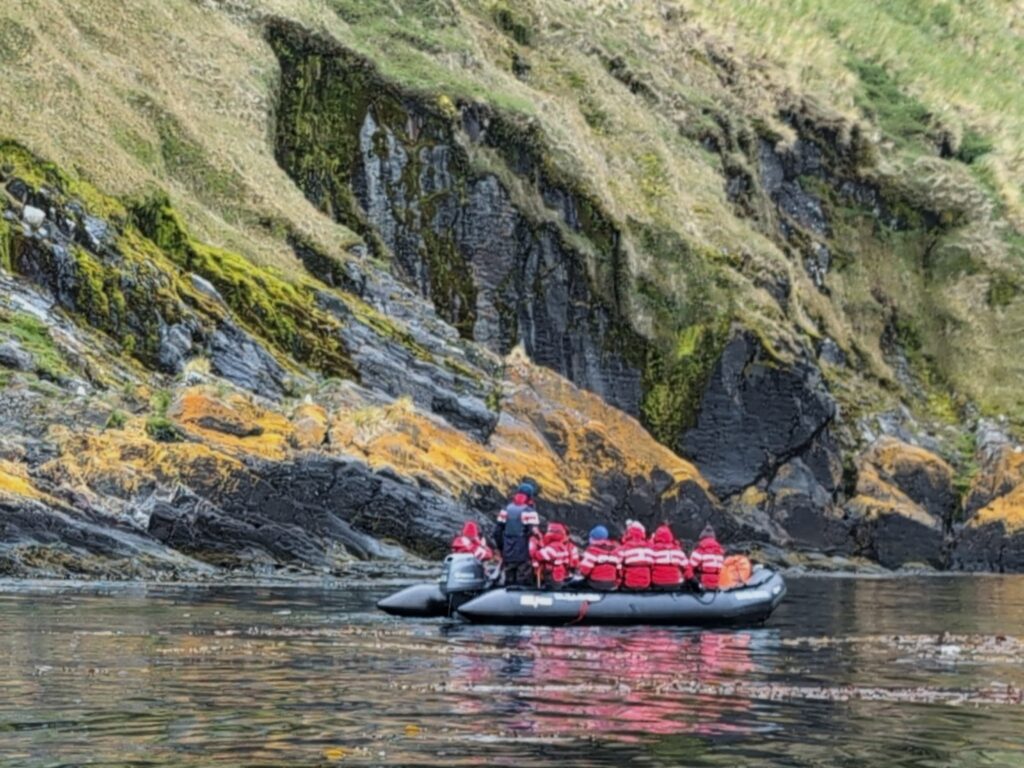
During the zodiac cruise, wildlife was everywhere. We saw macaroni penguins, seals, and several bird species, including the South Georgia pipit, albatrosses, cormorants, and petrels. The bay was quiet, and the surrounding mountains and ice created a dramatic setting for the morning.
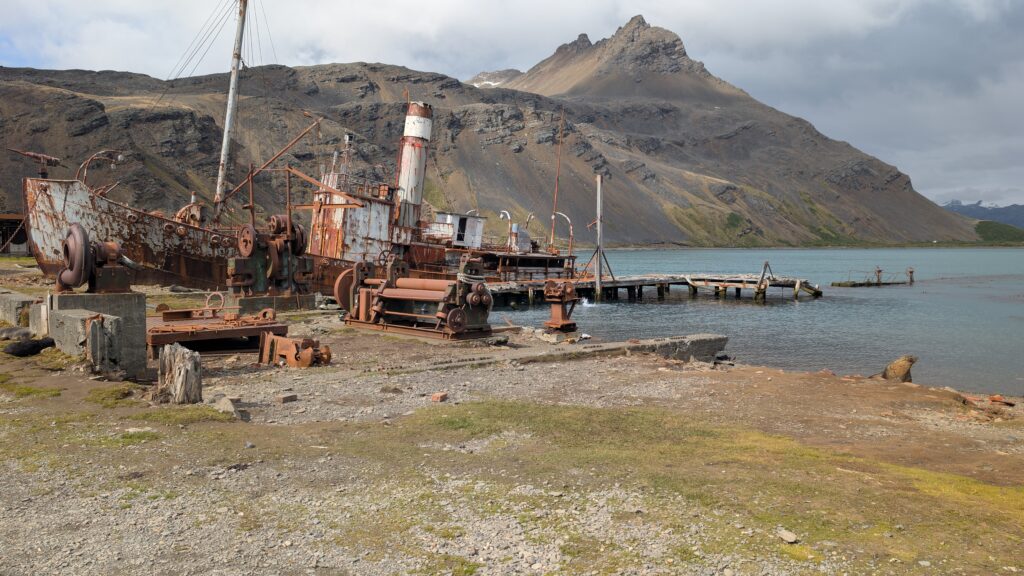
Later in the day, we went ashore at Grytviken, one of the most historically important places in South Georgia. We visited the resting place of Sir Ernest Shackleton, known to many as “The Boss”, as well as the grave of his close companion and second-in-command during the Endurance expedition, Frank Wild.
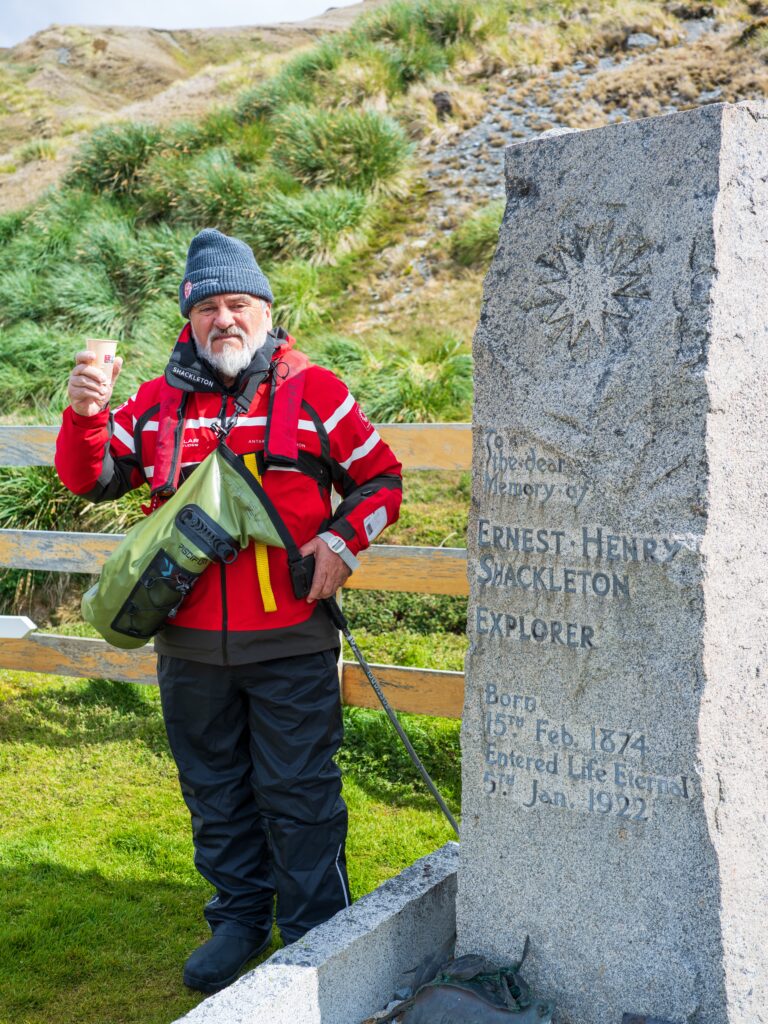
Walking through Grytviken, with the remains of the old whaling station and the history of exploration all around, gave the visit a reflective feeling. It was a place where the natural richness of South Georgia and its human history come together.
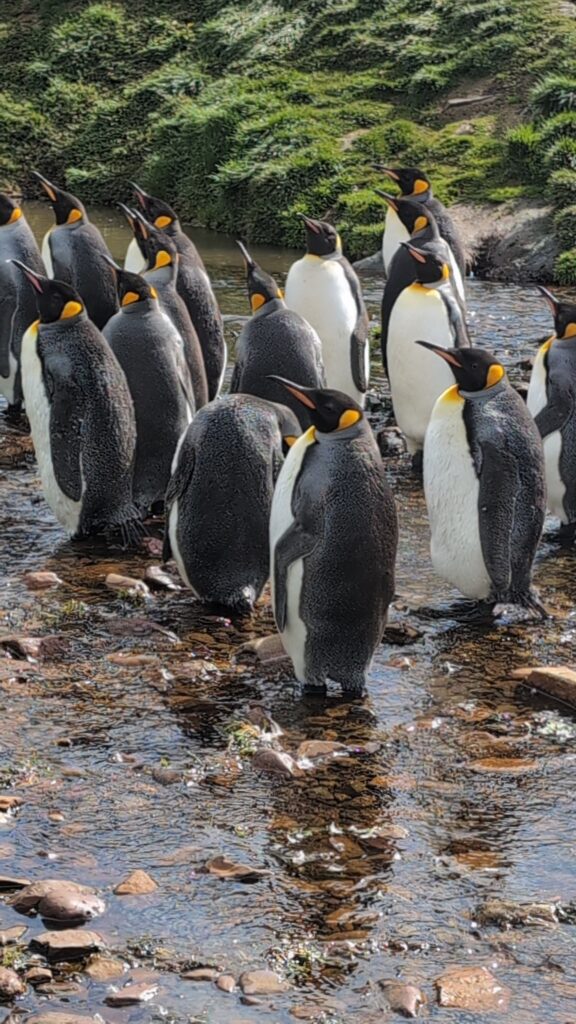
January 8 combined wildlife, landscape, and history, making it one of the most complete days of the journey.
January 9 – Fortuna Bay
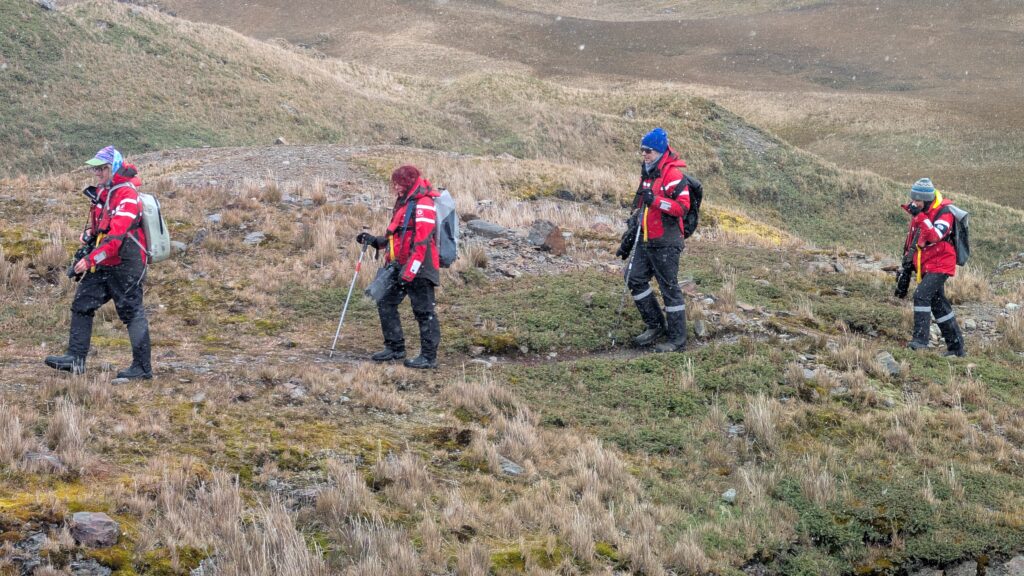
We arrived at Fortuna Bay in the morning while it was snowing, which gave a different and interesting atmosphere to the excursion.
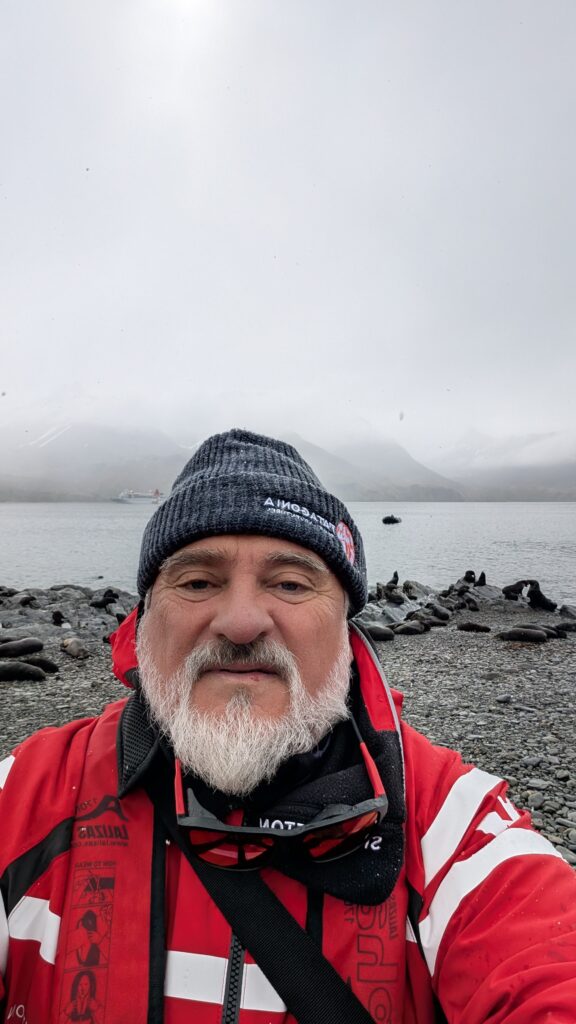
During the visit, we were surrounded by king penguins, with albatrosses flying overhead and fur seals and southern elephant seals resting along the beach. We walked toward a large king penguin colony, and the sound of the chicks was intense and constant.
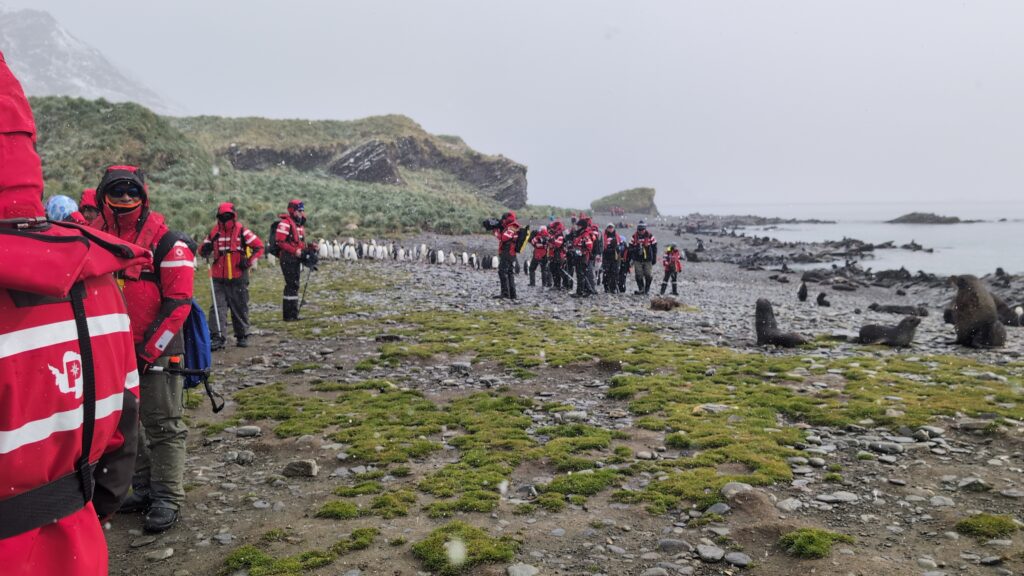
Skuas were also flying above the colony, always alert and searching for food. The combination of snow, wildlife, and sound made Fortuna Bay feel very active and alive.
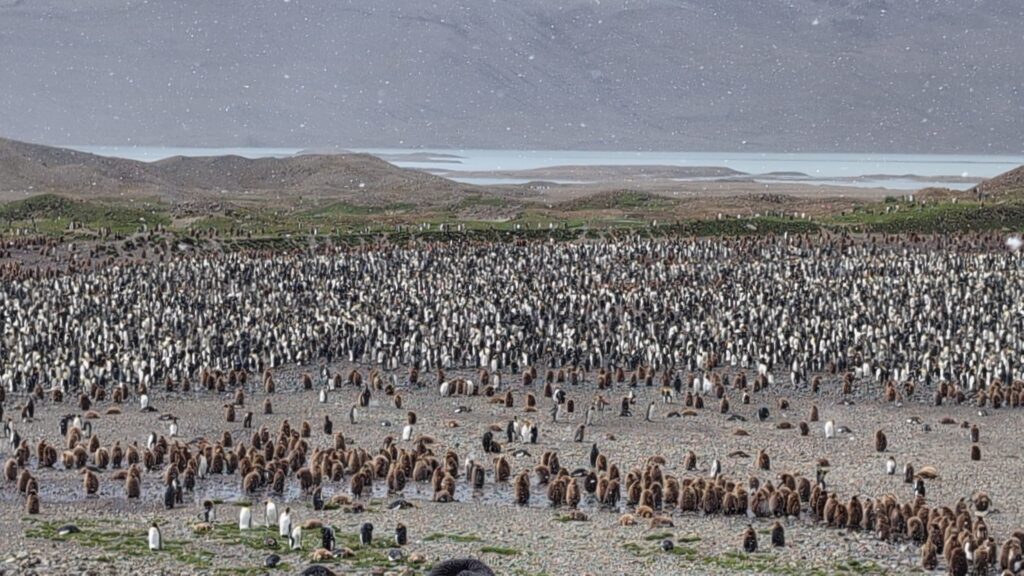
The snowy conditions added a special character to the morning and made the experience even more memorable.
January 10 – Salisbury Plain & Elsehul Bay
It was an early start for a big day. Before 8:00 am, we were already on shore at Salisbury Plain, home to the second-largest king penguin colony on South Georgia.
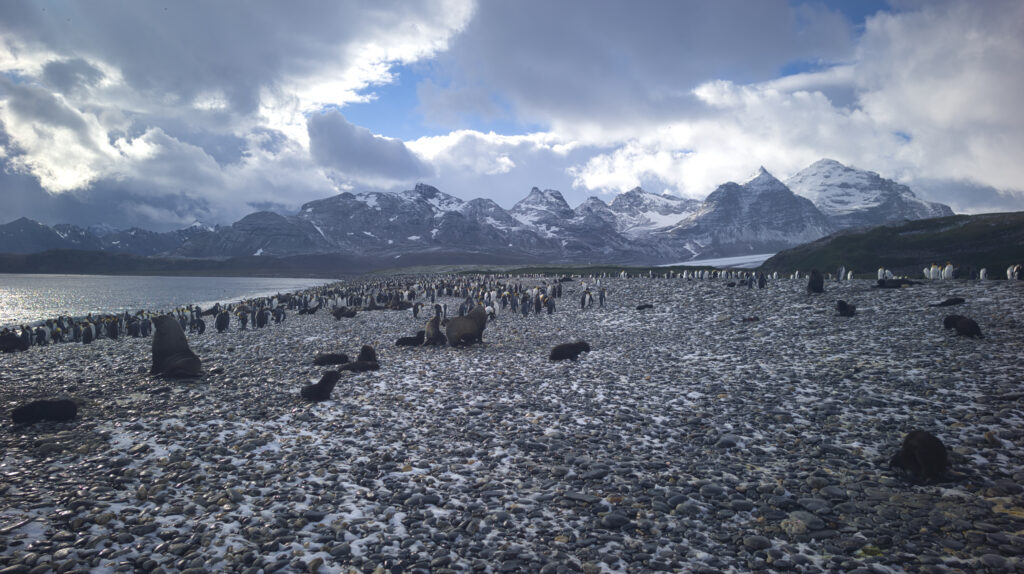
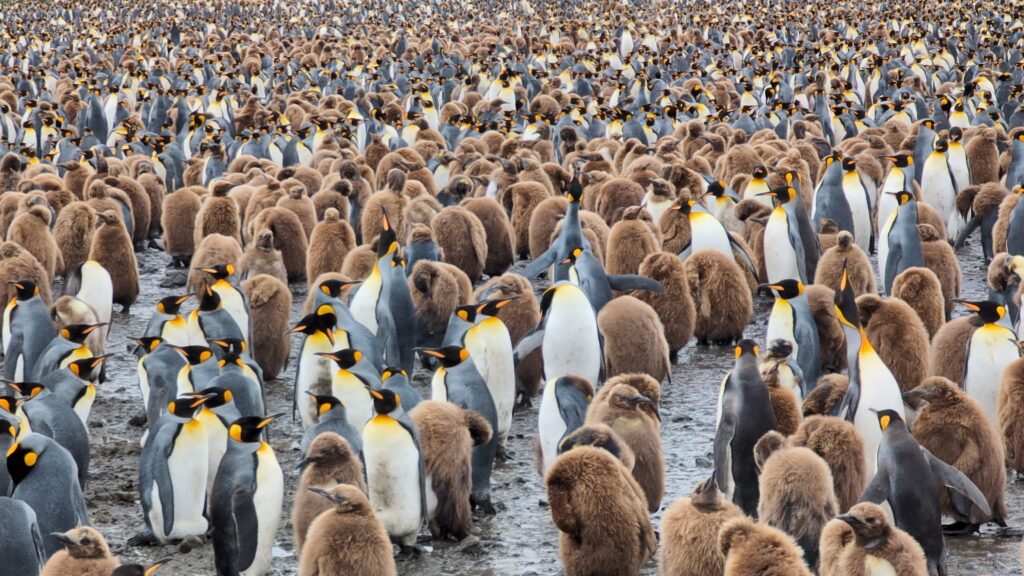
We had nearly four hours to walk among the wildlife. We were surrounded by thousands of king penguins, a few Gentoo penguins, skuas, many fur seals, some southern elephant seals, and giant petrels, with albatrosses flying overhead. Walking through the colony was challenging due to the density of the animals and the muddy ground, while the loud calls of the brown, fluffy king penguin chicks filled the air around us.
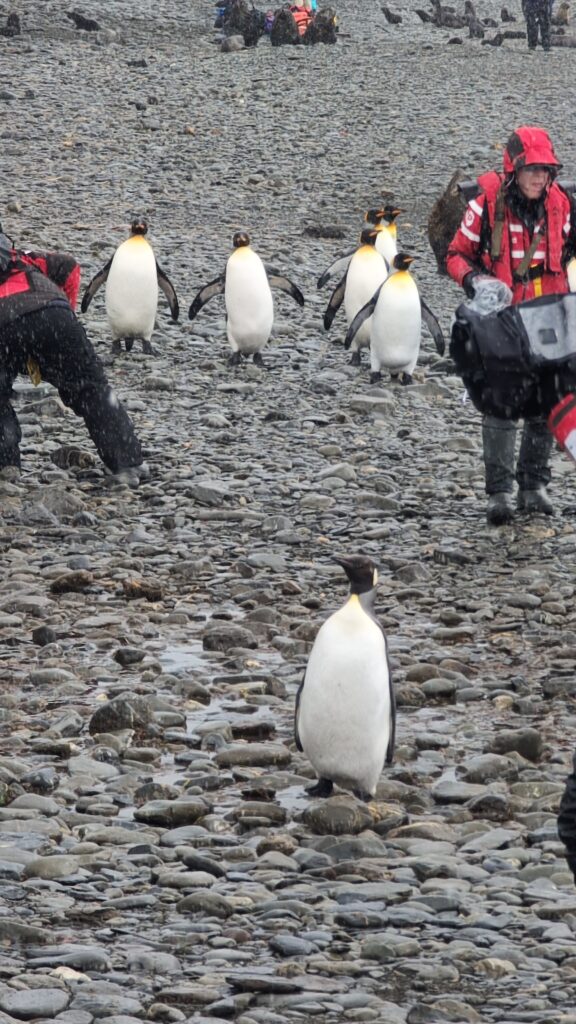
Snow was falling, and the views were stunning. Once inside the colony, both the sound and the scenery were hard to leave behind. The four hours passed quickly, even with the cold wind blowing snow into our faces.
We returned to the Seaventure for lunch and spent a couple of hours resting and warming up. In the afternoon, we boarded the zodiacs again for our final excursion in South Georgia, heading to Elsehul Bay.
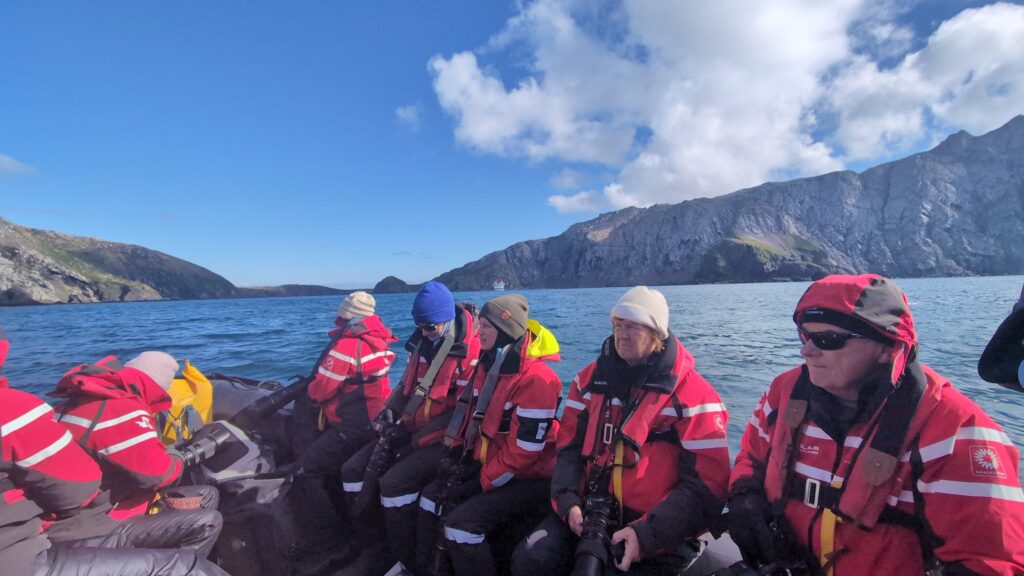
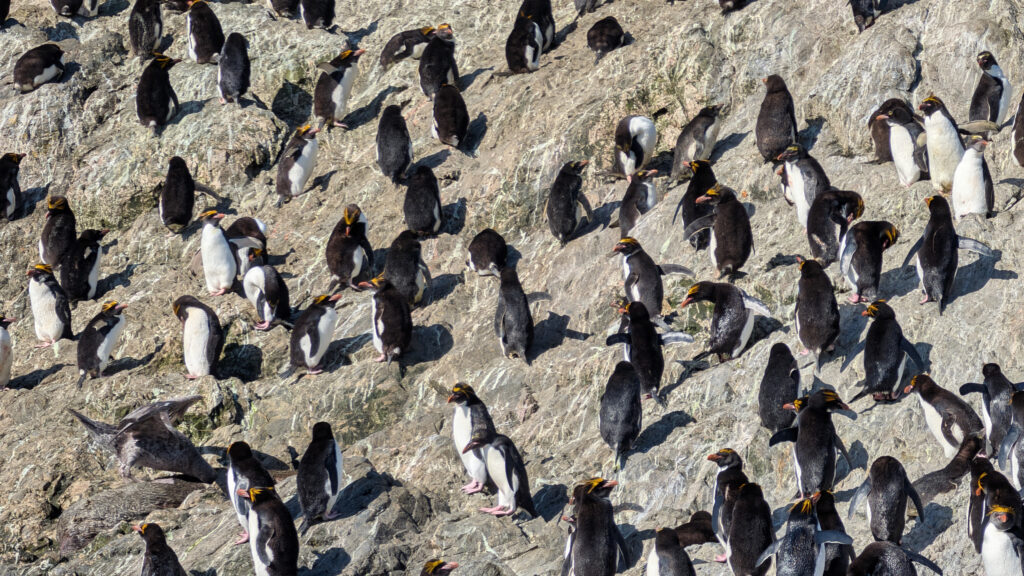
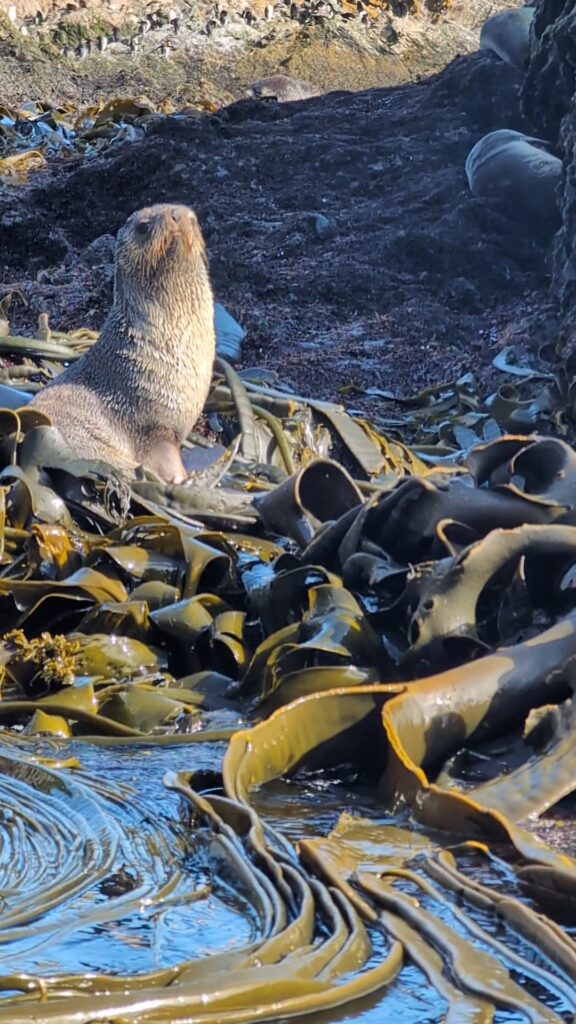
There, we saw macaroni penguins, a few king penguins, the ever-present Gentoo penguins, and a large albatross colony, with three species nesting together. We also saw giant petrels and elephant seals along the shore.
As a farewell gift, a southern right whale appeared. It approached our boats and stayed close. The photographers had to put their cameras away and reach for their phones — the whale was simply too close for long lenses.
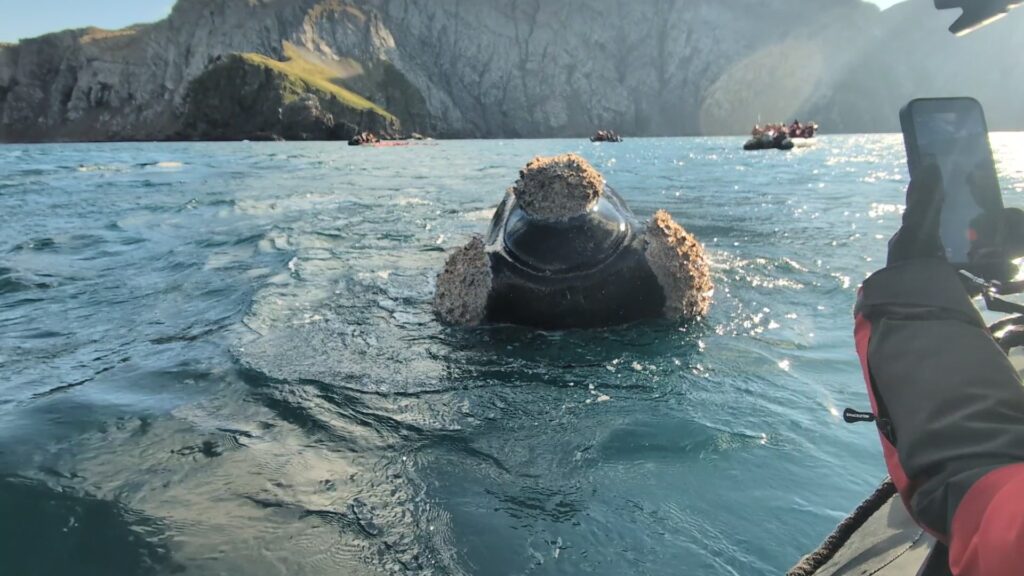
Southern right whales are rarely seen in sub-Antarctic waters because they feed alone and are spread over large areas, unlike in their breeding grounds at Peninsula Valdés, where their density is much higher.
Seeing one here was a real privilege.
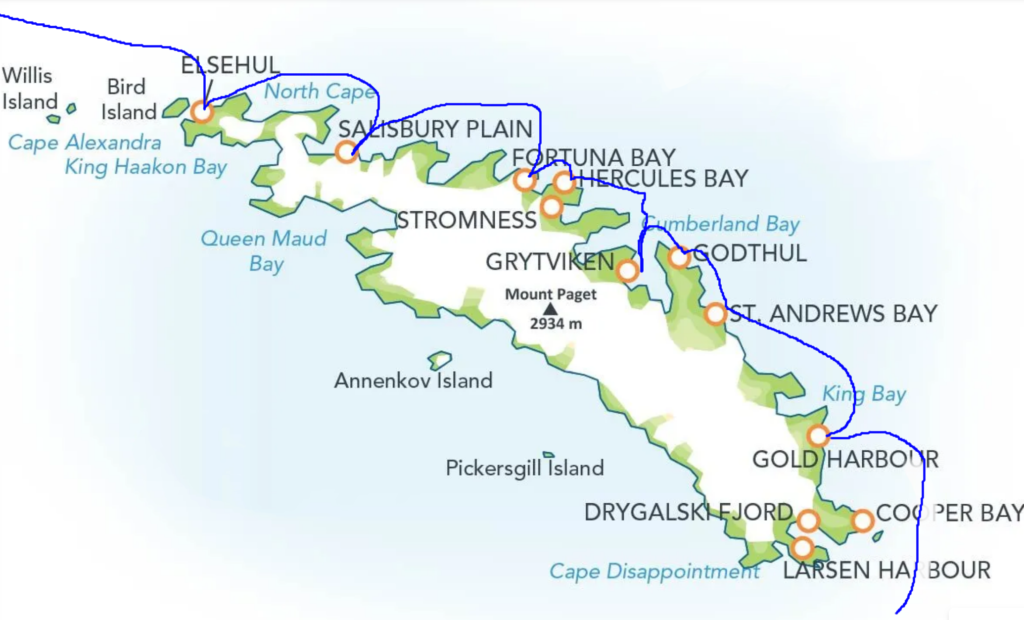
Jan 11–12 — Sailing toward the Falklands (Malvinas)
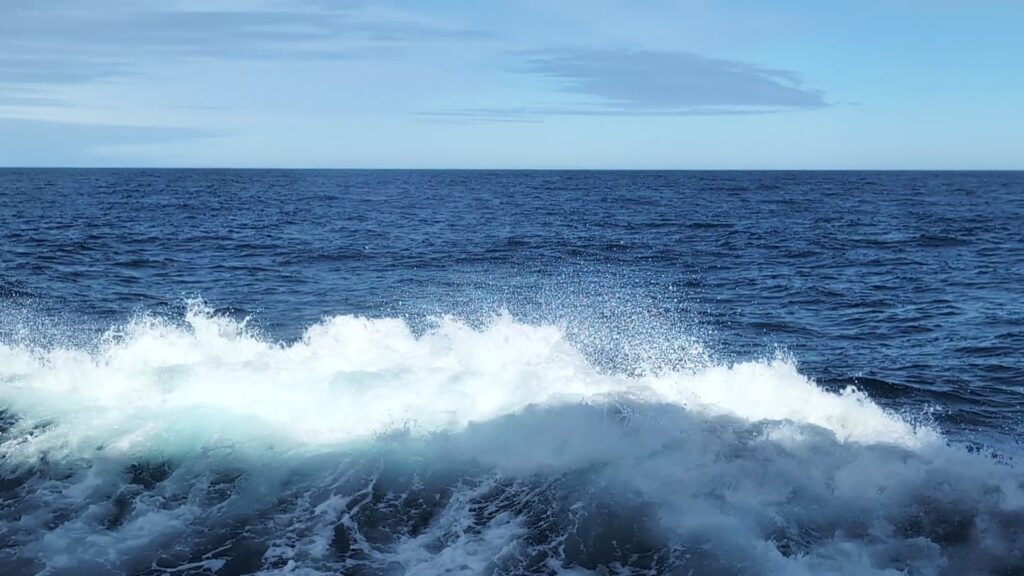
Two sea days northbound after South Georgia, with the ship in its steady rhythm again.
Bridge tours, whale talks, citizen science surveys on deck, expedition games, and evening recaps.
The ocean looks quiet, but there is always something happening — above and below the surface.
Falklands ahead.
Tuesday, January 13 — Stanley, Falkland Islands (Malvinas)
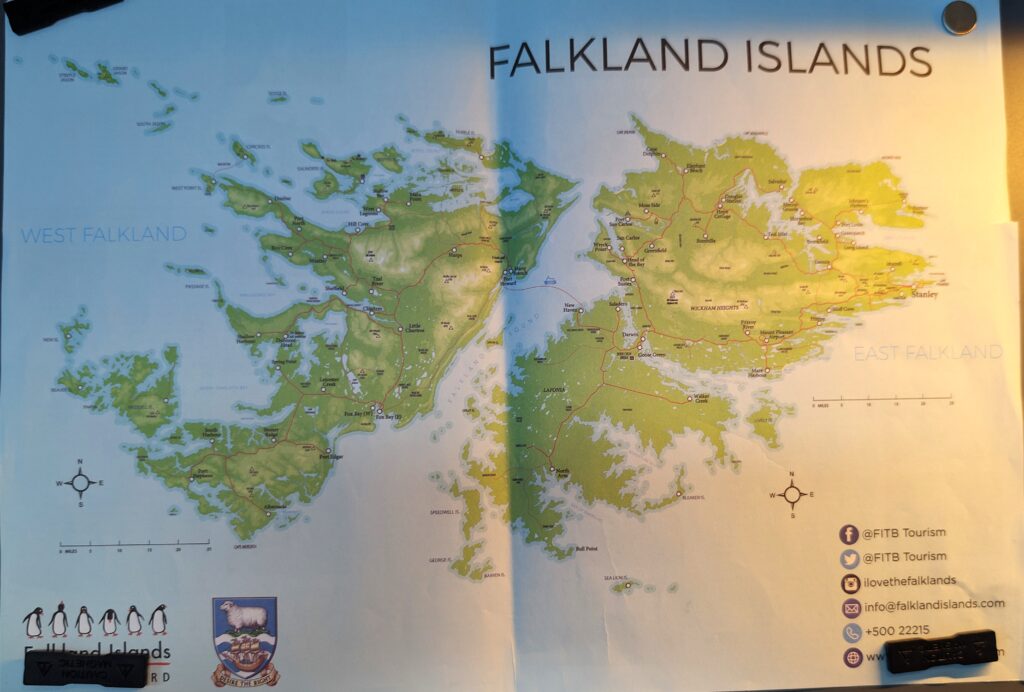
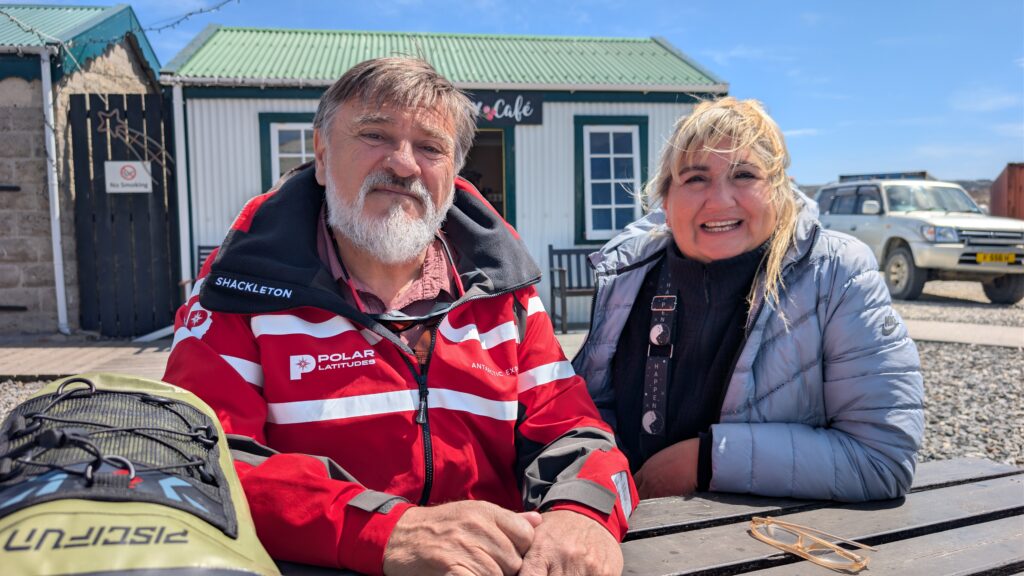
Today we disembarked by zodiac in Stanley. Some people joined the tour to Gypsy Cove, but I decided to stay in town since I learned that a cousin from my home town Rio Gallegos was there.
I had not seen Graciela for more than fifteen years. There was no planning, no expectation — and still, on January 13, we both ended up in Stanley, at the same time, at the end of the world.
It felt unreal. An epic coincidence.
We walked through the streets of Stanley, visited the museum, and shared a cup of coffee together before I returned to the ship.
In a journey full of ice, wildlife, and remote landscapes, this unexpected family encounter became one of the most unforgettable moments of the trip.
Wednesday, January 14 — New Island, West Falkland Islands (Malvinas)
This morning, weather permitting, we landed at New Island North Harbour for a longer walk of about three miles (five kilometers) round trip. The terrain was open and windswept, with low grasses, rocky ground, and wide views of the coastline. Along the way, we encountered Magellanic and Gentoo penguins, moving between the shore and their nesting areas.
The highlight of the morning hike was reaching the area where albatrosses and rockhopper penguins were nesting. Seeing an albatross colony for the first time was impressive. During the summer breeding season, adults take turns incubating eggs or guarding chicks while their partners travel long distances over the ocean to feed. Even from a respectful distance, it was striking to watch them standing on their nests and then launching from the cliffs, gliding effortlessly in the strong wind.
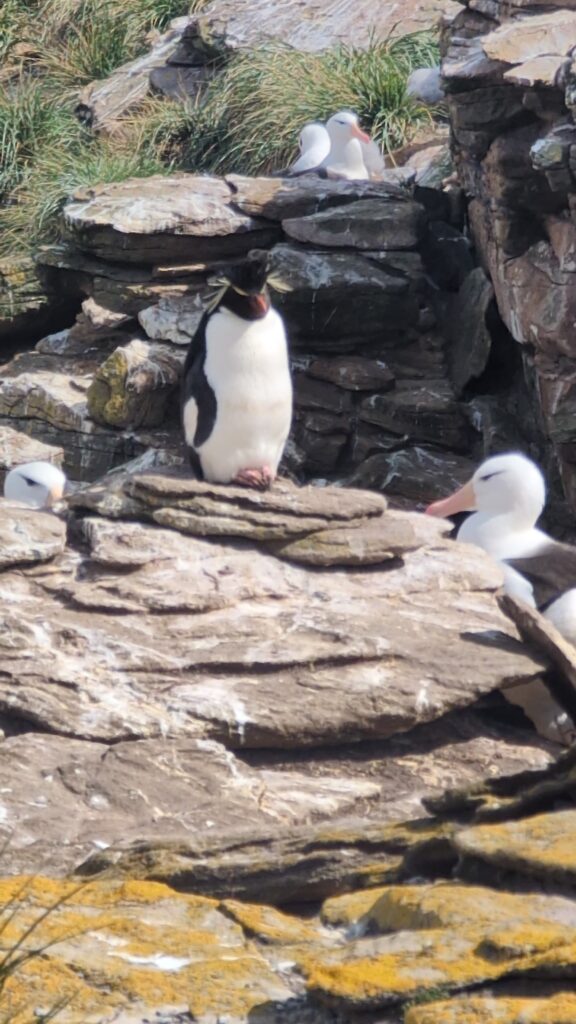
Nearby, the rockhopper penguins were active and noisy, climbing the rocky slopes with surprising agility. Their yellow crests and constant movement contrasted with the calm presence of the albatrosses overhead.
After lunch, we landed again, this time at New Island Settlement, for a shorter walk of about 1.2 miles (2 kilometers). If the morning had been an introduction, the afternoon brought us even closer to the colonies. Here, albatrosses were nesting alongside shags (cormorants), and we were able to observe them at a shorter distance.
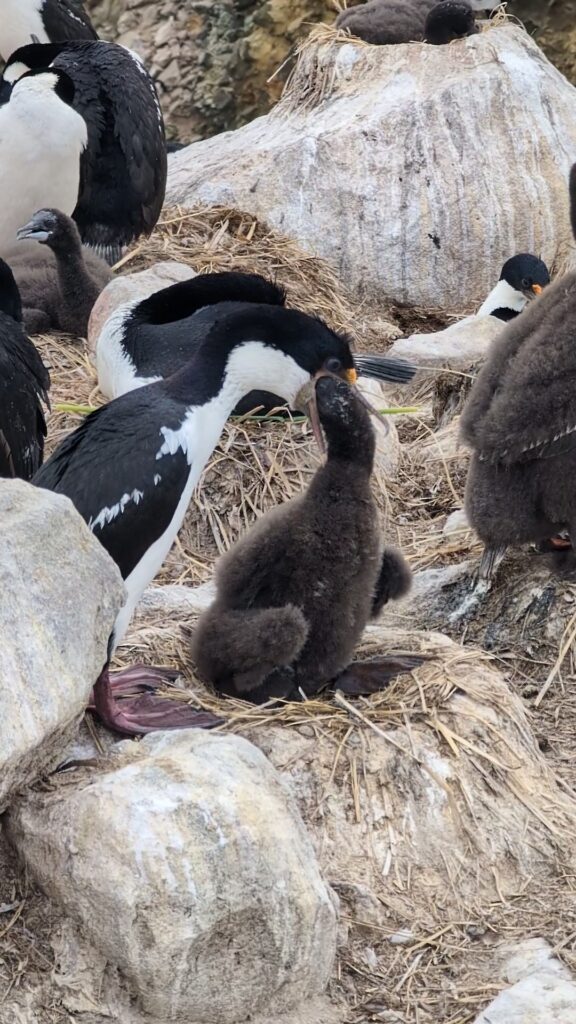
The mix of species was remarkable. The albatrosses stood over their nests with their large wings folded tightly against the wind, while the shags tended to their chicks, clustered along the rocky edges. The chicks were clearly visible in several nests, adding constant movement and sound to the colony.
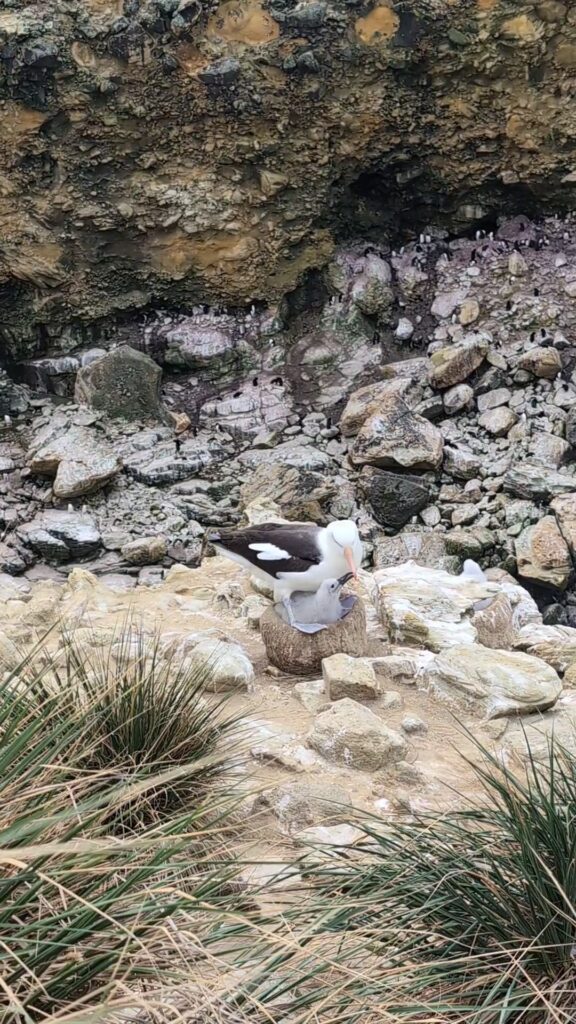
Seeing the birds so close together highlighted the density and diversity of life in these coastal cliffs. The wind, the calls, and the steady movement of adults arriving and departing created a scene that felt both dynamic and timeless.
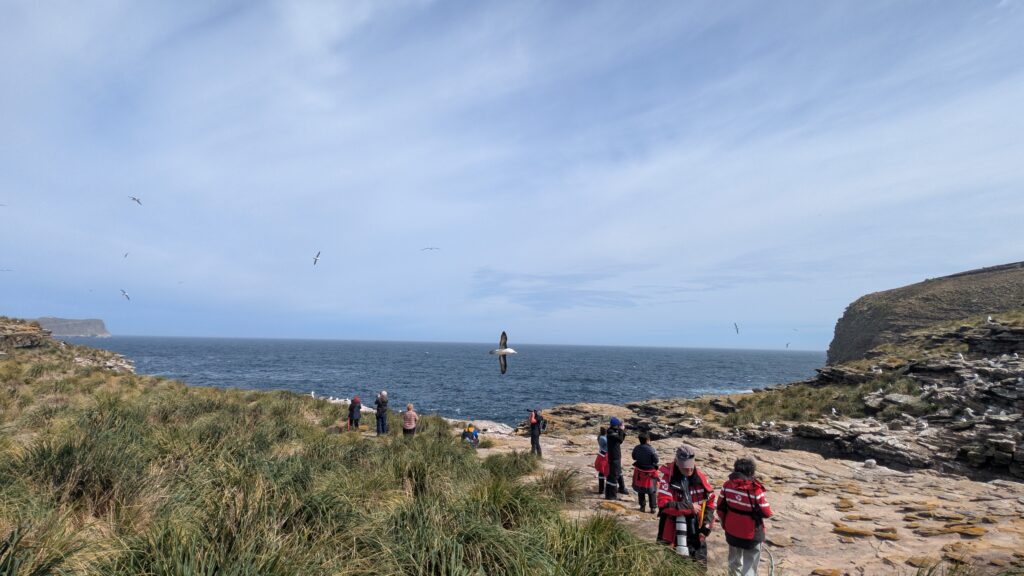
New Island offered two very different but complementary experiences in a single day — a long, scenic hike across open land in the morning, and a closer look at a mixed seabird colony in the afternoon.
This was also our last day of the expedition. After dinner, we began sailing back toward Ushuaia, expecting to arrive tomorrow night and disembark the following morning. It was a fitting final day, ending the voyage with one more unforgettable encounter with the wildlife of the Malvinas.